
Delivering a Horizon Europe project goes far beyond developing innovative technologies. It also means bringing together partners with different areas of expertise, aligning technical and strategic objectives, and ensuring that research translates into practical solutions. In this edition of our #DTERBIMVoices series, we speak with Sonia Álvarez Díaz, Project Coordinator of DTERBIM and researcher at CARTIF Technology Centre. With a background in architecture, Sonia shares what motivates her and why collaboration is key to driving the digital and circular transformation of Europe’s construction sector.
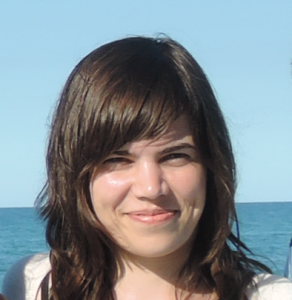
To begin, could you tell us a little about yourself? What is your background, and what does your work at CARTIF focus on today?
I am Sonia Álvarez Díaz, an architect and researcher in the Energy Division of CARTIF Technology Centre, within the Energy Efficiency Area. I hold a PhD in Architecture, focused on the use of BIM and advanced digital technologies for energy-efficient building renovation projects, as well as a Master’s degree in Technologies for the Protection of Immovable Cultural Heritage.
My current work focuses mainly on the application of digital technologies to energy efficiency management, building and urban renovation, and semantic 3D modeling through GIS and BIM technologies, as well as their connection with Digital Twins.
What aspects of your work do you find most rewarding? What continues to inspire and motivate you?
What I enjoy most is the variety of topics I work on, mainly related to the use of digital technologies in the built environment to improve energy efficiency, from building scale to city scale. I also value the more practical side of my work, such as on-site data collection for building digitalisation and energy audits, as well as the development of decarbonisation plans and energy improvement strategies. This keeps me closely connected to real buildings and real challenges.
What keeps me motivated is learning. I really enjoy learning about new topics, proposing new ideas, and applying them in both proposals and real projects.
“What keeps me motivated is learning. I really enjoy learning about new topics, proposing new ideas, and applying them both in proposals and in real projects.”
As DTERBIM’s Project Coordinator, what are your main responsibilities? What challenges are you addressing?
Within DTERBIM, I have several responsibilities. My main role is as Project Coordinator, but I am also involved in the technical development of the project. As Project Coordinator, my focus is on ensuring that all technical, organisational, and strategic elements of DTERBIM move in the same direction. I would say this is one of the main challenges of the project.
“As Project Coordinator, my focus is on ensuring that all technical, organisational and strategic elements of DTERBIM move in the same direction.”
Looking at the first months of the project, what have been the main achievements? And what priorities lie ahead?
From a coordination perspective, starting a European project always requires a significant effort in terms of management, administration, and technical alignment. During these first months, we have focused on setting up the project structure, supporting the consortium, clarifying initial questions, and addressing the first issues that naturally arise in a project involving 18 partners and three real demonstration sites.
One of the closest objectives at the project level is to have the first definition of the BIM-based renovation and new construction processes across the complete building lifecycle. This will be a collaborative process, based on the analysis of stakeholders’ needs, barriers, and challenges in business-as-usual circular and energy renovation practices. This participatory approach is essential to ensure that the solutions developed in DTERBIM are relevant, scalable, interoperable, and useful for the sector.
What impact do you hope DTERBIM will have on the construction sector?
At the general project level, I believe one of the greatest impacts of DTERBIM will be to demonstrate how digitalisation can transform the way we design, renovate, and manage buildings, integrating circularity to achieve more efficient and sustainable processes.
“One of the greatest impacts of DTERBIM will be to demonstrate how digitalisation can transform the way we design, renovate, and manage buildings, integrating circularity to achieve more efficient and sustainable processes.”
As a result of our work, I would like to see the Architecture, Engineering, and Construction (AEC) sector move towards a more innovative, sustainable and connected model, where Small and medium-sized enterprises (SMEs) in particular can engage more easily with a collaborative digital ecosystem through the DTERBIM Toolkit and its accessible, cost-effective, and easy-to-use digital solutions.
“I would like to see the AEC sector move towards a more innovative, sustainable and connected model, where SMEs can engage more easily with a collaborative digital ecosystem through the DTERBIM Toolkit.”
This is the fourth in a series of interviews with DTERBIM partners, highlighting the people, stories, and ideas driving the project forward.
Want to meet more of the experts behind DTERBIM? Follow us on LinkedIn, Bluesky, X, and YouTube, and subscribe to our newsletter for future interviews and project updates.
Read Sonia Álvarez’s second interview, where she expands on her role within DTERBIM, both as Project Coordinator and as the leader of Work Package 4 (WP4), “Digital tools for efficient, circular and sustainable Design & Construction”: