
From linear to circular renovation: DTERBIM officially launches
The DTERBIM project (Driving Transformation on Energy-efficient and circular Renovation through BIM) has officially launched, marking the start of an ambitious 42-month initiative to transform Europe’s construction and renovation sector. To announce the project’s start, the consortium has released its first official press release, outlining DTERBIM’s vision, objectives, and planned pilot activities. Funded under the European Union’s Horizon Europe programme with a budget of €3.83 million, DTERBIM aims to accelerate the shift from linear construction processes to digital, circular, and energy-efficient renovation.
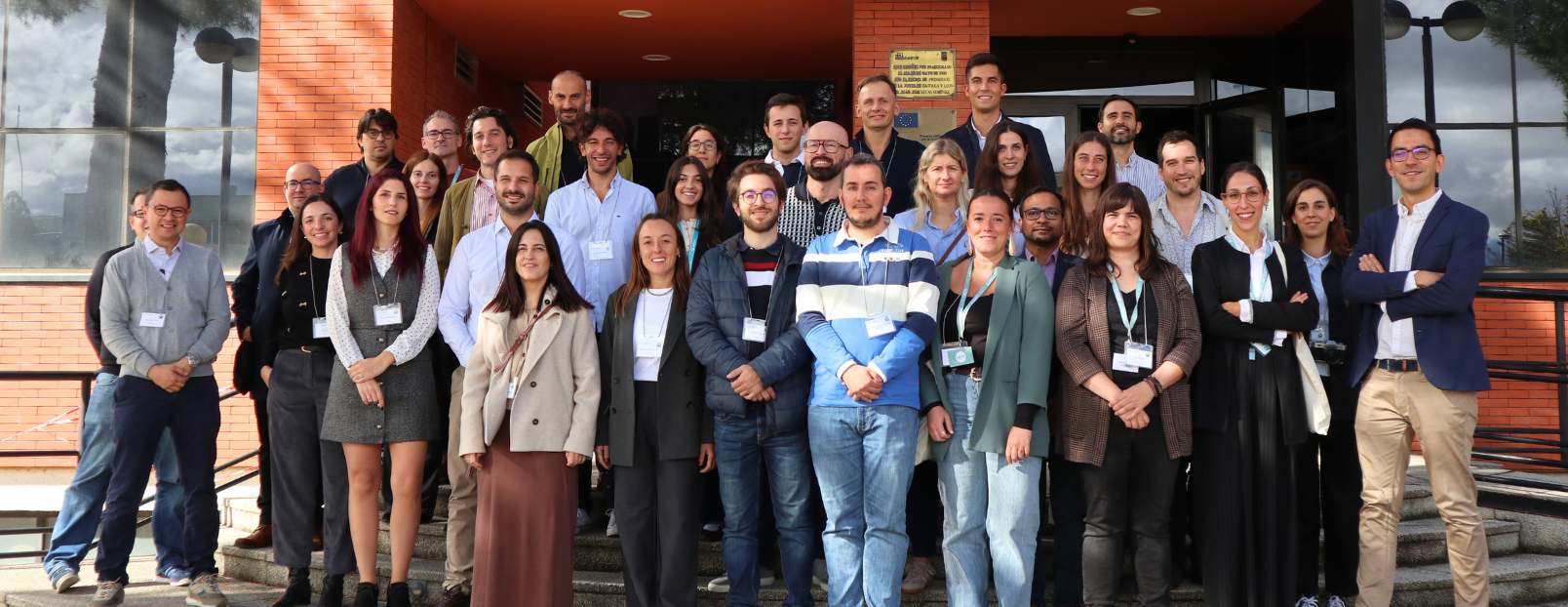
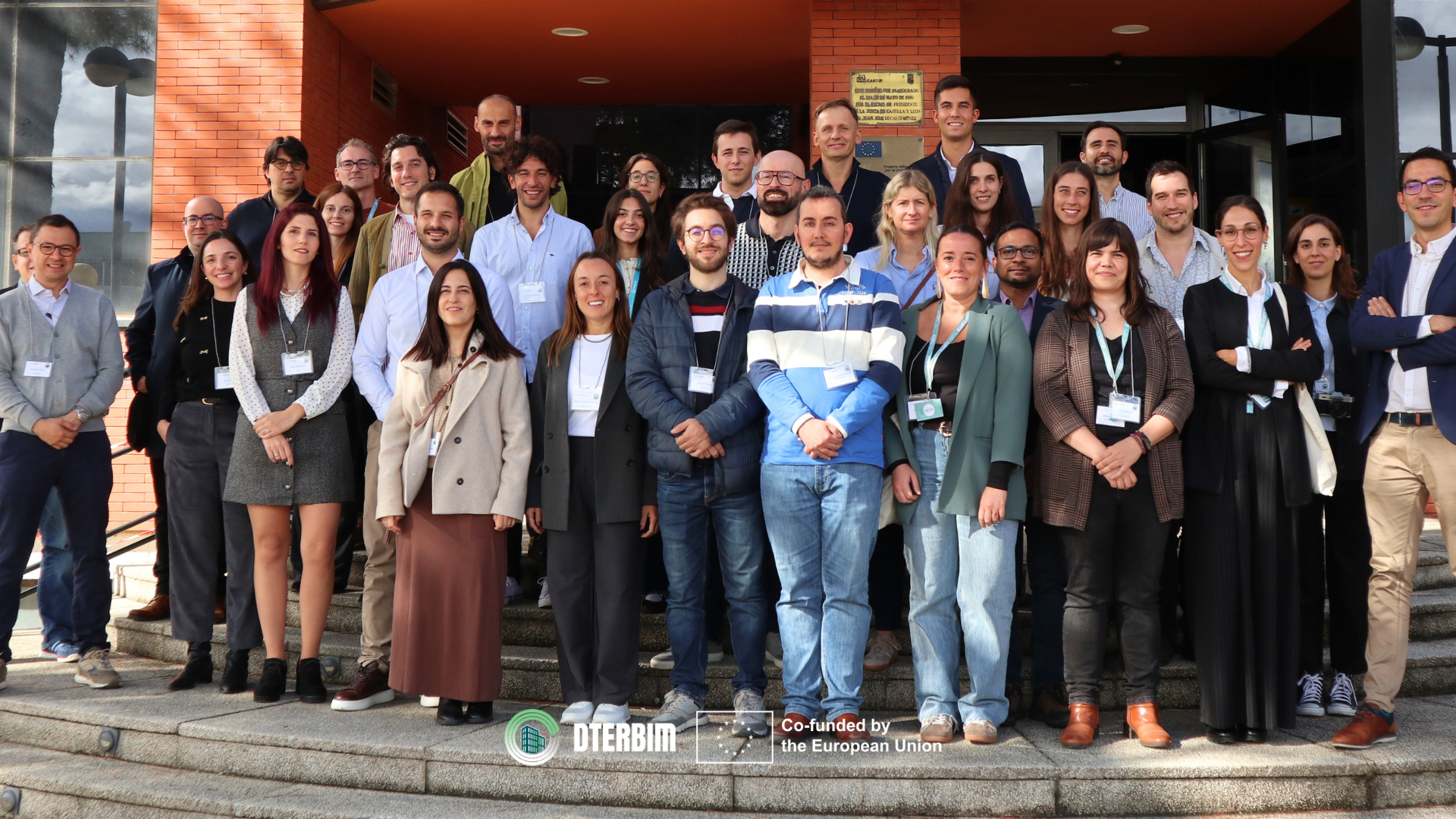
The project officially kicked off on 29-30 October 2025 at the CARTIF Technology Centre in Valladolid, Spain, bringing together 18 partners from eight countries for two days of alignment, planning, and a visit to one of the real-life pilot buildings.
A vision for circular, digital, and sustainable renovation
DTERBIM is developing an innovative, interoperable, and adaptable BIM-based methodology, the DTERBIM process, to make building renovation and management more efficient. By optimising resources such as materials, products, and energy, reducing time and costs, and embedding circularity principles from the outset, the project seeks to transform how buildings are designed, renovated, and managed.
At the centre of this approach is the DTERBIM Toolkit, a suite of user-friendly digital tools, AI-powered services, and Digital Twins, all integrated within an openBIM ecosystem. This ecosystem ensures seamless interaction between tools, robust data exchange, and collaboration across stakeholders, empowering the construction sector to make informed, sustainable decisions throughout the building lifecycle. From design and construction to operation, maintenance, deconstruction, and reuse.
“The DTERBIM project aims to demonstrate how digitalisation can transform the way we design, renovate and manage buildings, integrating circularity for a more efficient and sustainable process. By combining digital technologies such as BIM, Artificial Intelligence, and Digital Twins, it will help improve material traceability and enable more informed decision-making throughout the building lifecycle. Ultimately, DTERBIM aspires to take a decisive step toward a more innovative, circular, and connected Architecture, Engineering, and Construction (AEC) sector,” says Sonia Álvarez Díaz, Project Coordinator, CARTIF.
Five pilot projects across Europe
DTERBIM will validate its methodology through two virtual pilots and three real-life building demonstrations:
- A residential historical building in Valladolid, Spain
- An academic building in Warsaw, Poland
- A kindergarten and elementary school in Athens, Greece
These pilots aim to deliver measurable results, including up to 15% reductions in costs and time, 35% improvements in building performance, and 15% of materials saved for reuse, while engaging over 60 SMEs at local and regional levels.
By aligning with key EU initiatives and incorporating participatory approaches, DTERBIM will define and demonstrate a new paradigm for the European construction and renovation sector.
A multidisciplinary consortium driving innovation
The DTERBIM consortium brings together engineering, architecture, computer science, environmental sciences, social sciences, economics, and policy expertise to ensure a holistic approach to innovation and implementation.
Partners include: CARTIF (project coordinator), Mostostal Warszawa, University College London, ICCS - NTUA (Institute of Communication and Computer Systems of NTUA), CEMOSA, CYPE, Contecht GmbH, Live Information System, Buildings Performance Institute Europe, Acciona Construcción, VEOLIA Servicios LECAM, GEOTER, FASADA, Warsaw University of Technology, Hellenic Passive House Institute, Urban Soul Project, Smartflex, and Australo.
DTERBIM is ready to reshape Europe’s renovation sector with digital, circular, and energy-efficient solutions.
Read the full press release here.
For press and collaboration enquiries, contact: dterbim@australo.org
Stay connected with DTERBIM! Subscribe to our newsletter and follow us on LinkedIn, X, Bluesky, and YouTube for the latest updates, project insights, and stories from our community.
