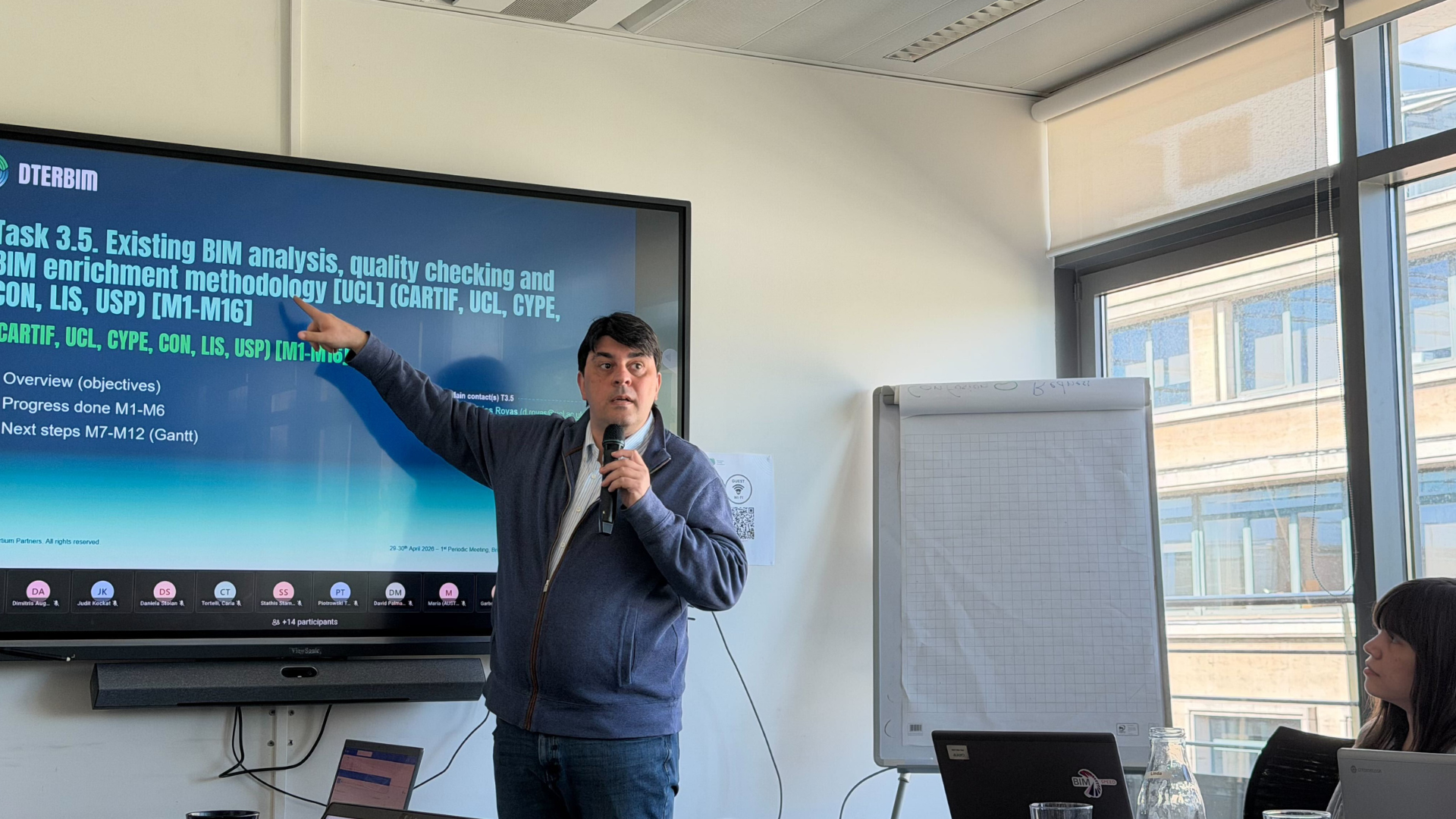
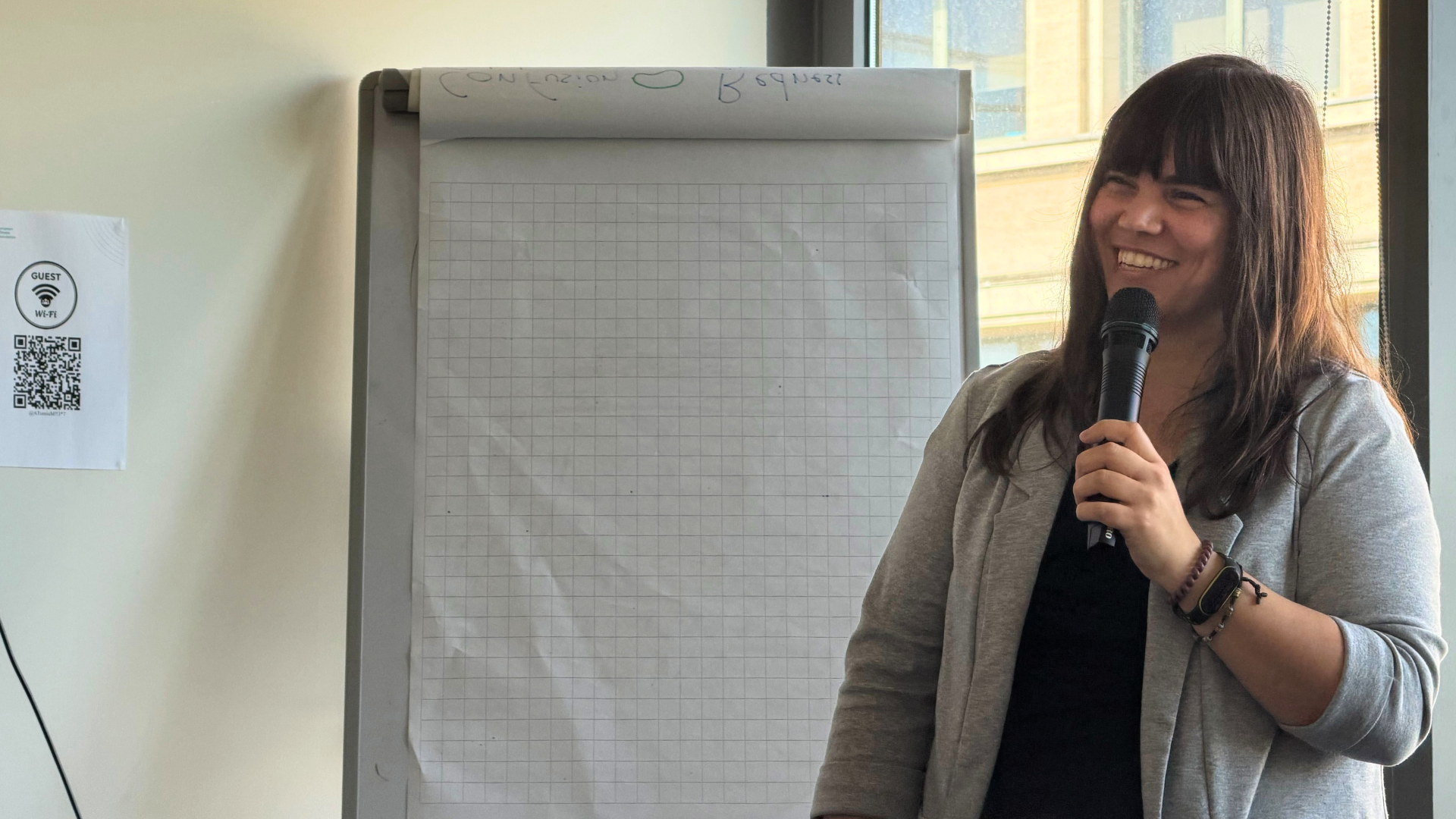
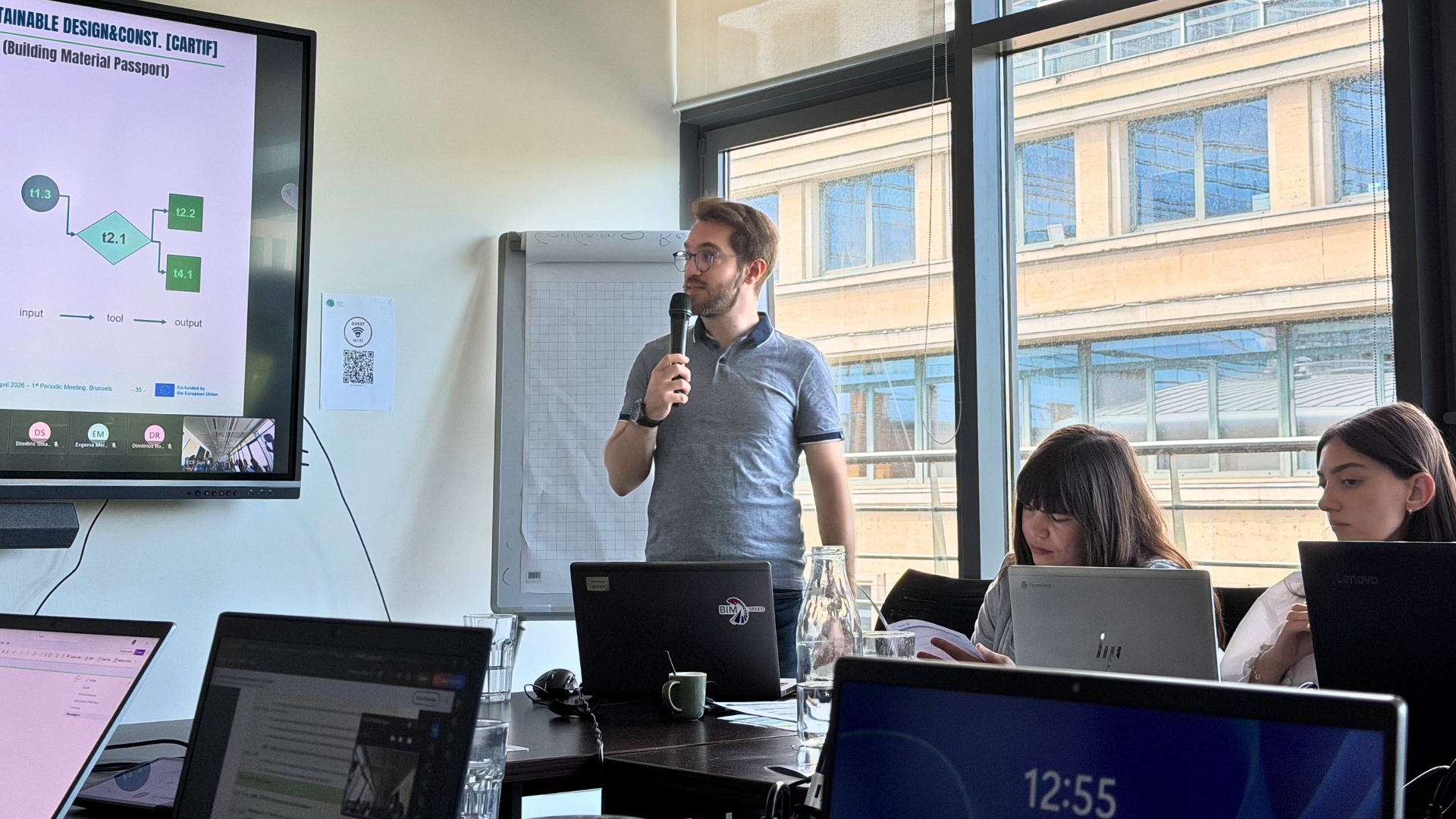
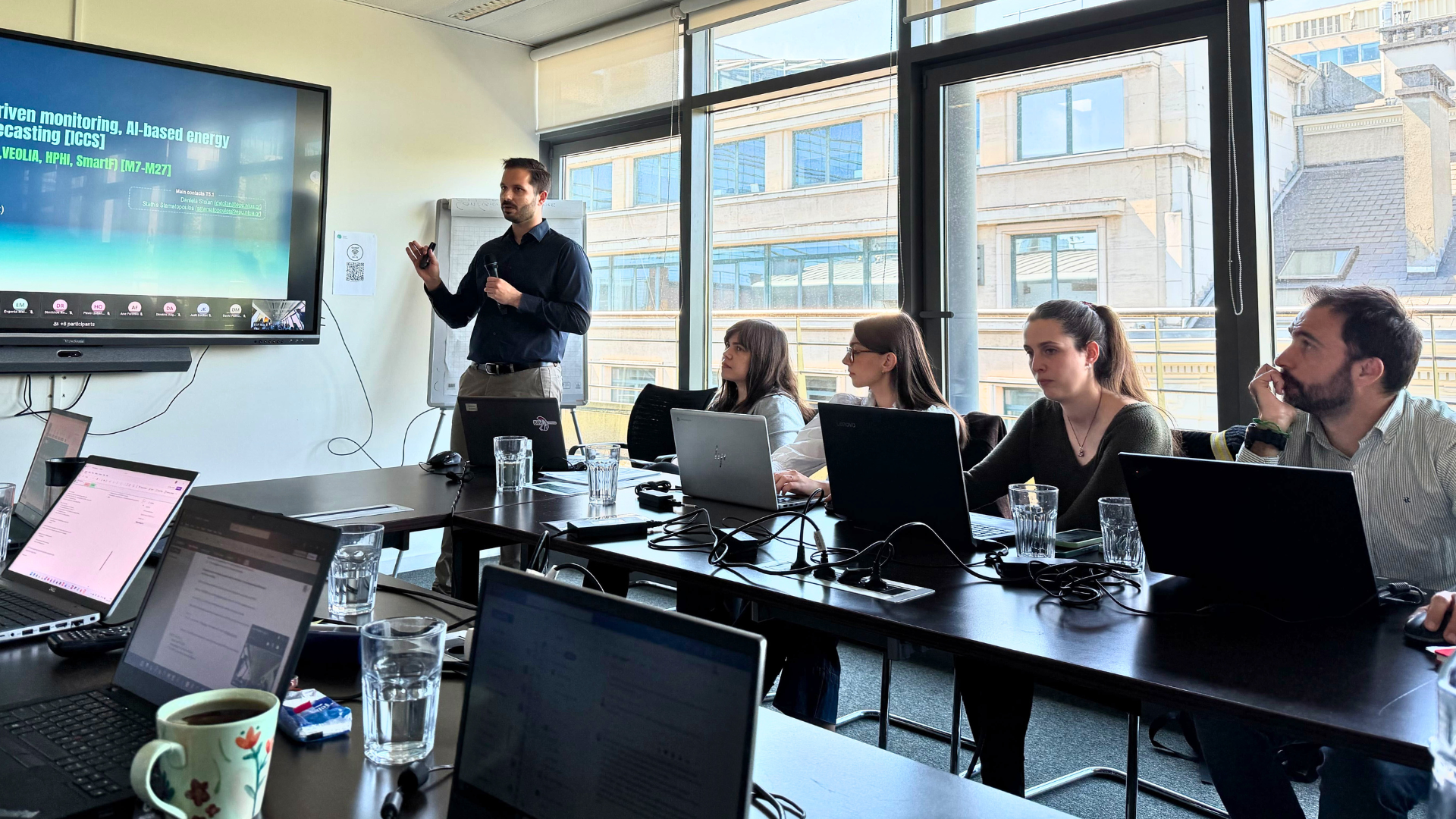
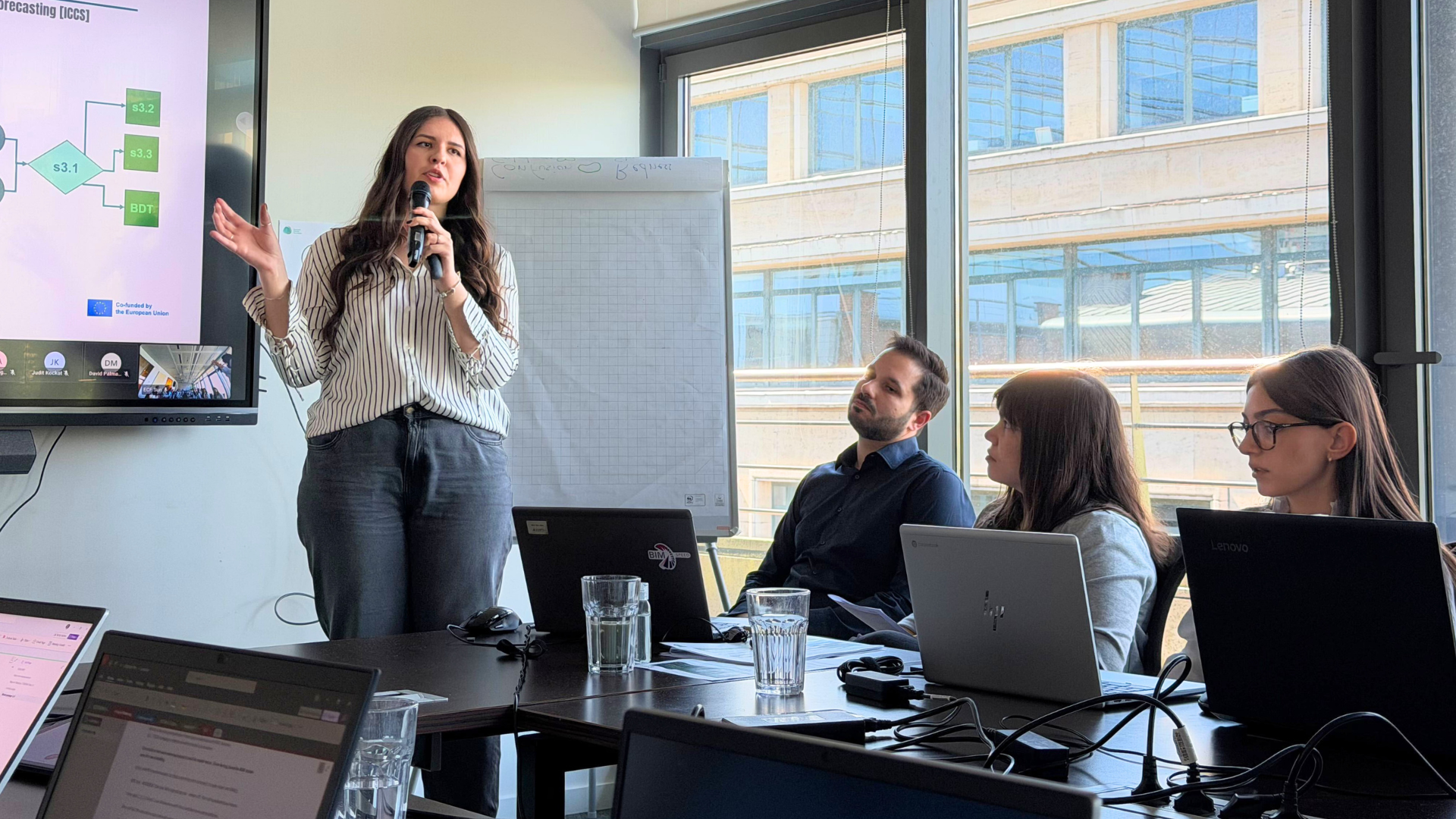
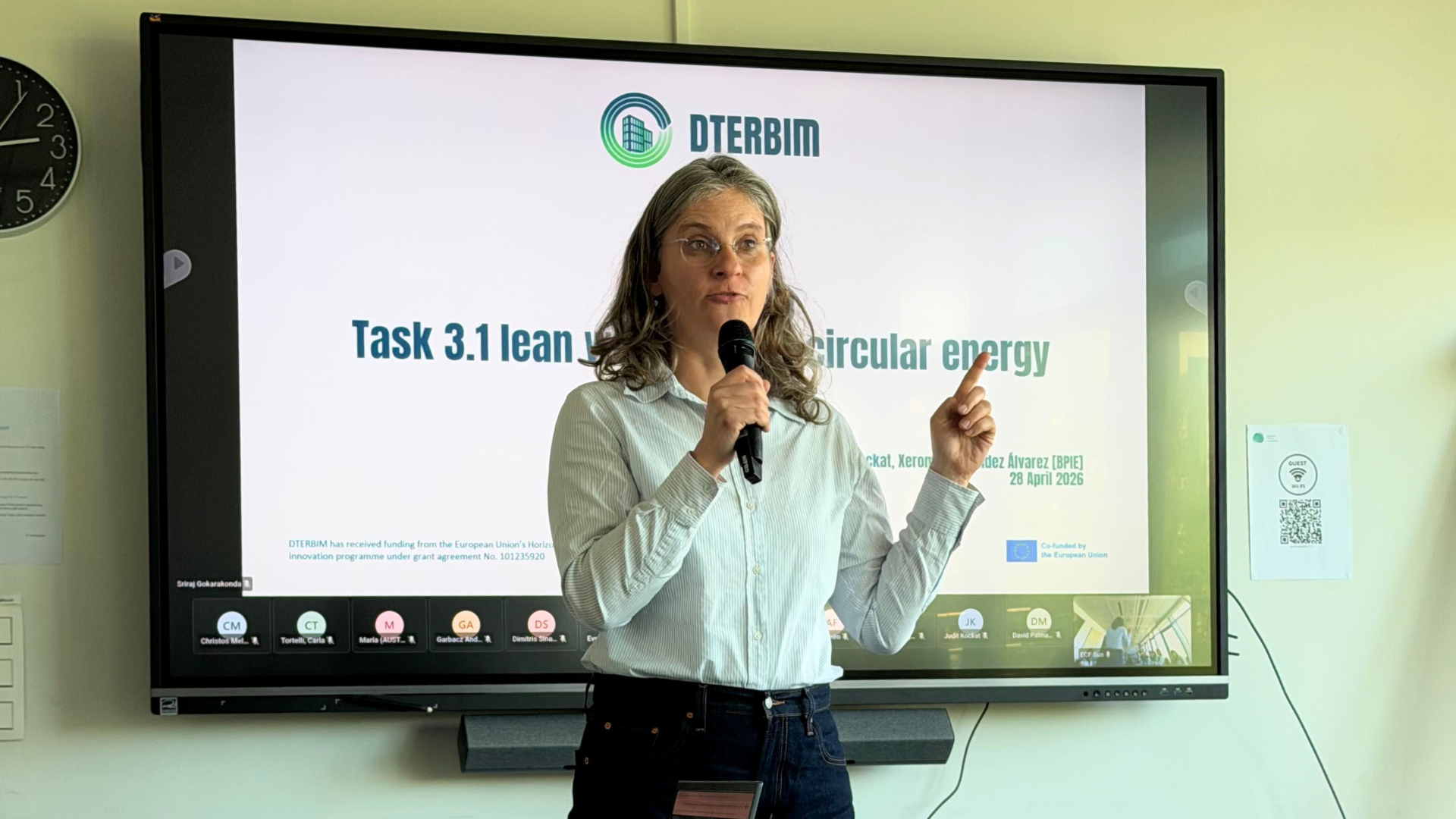
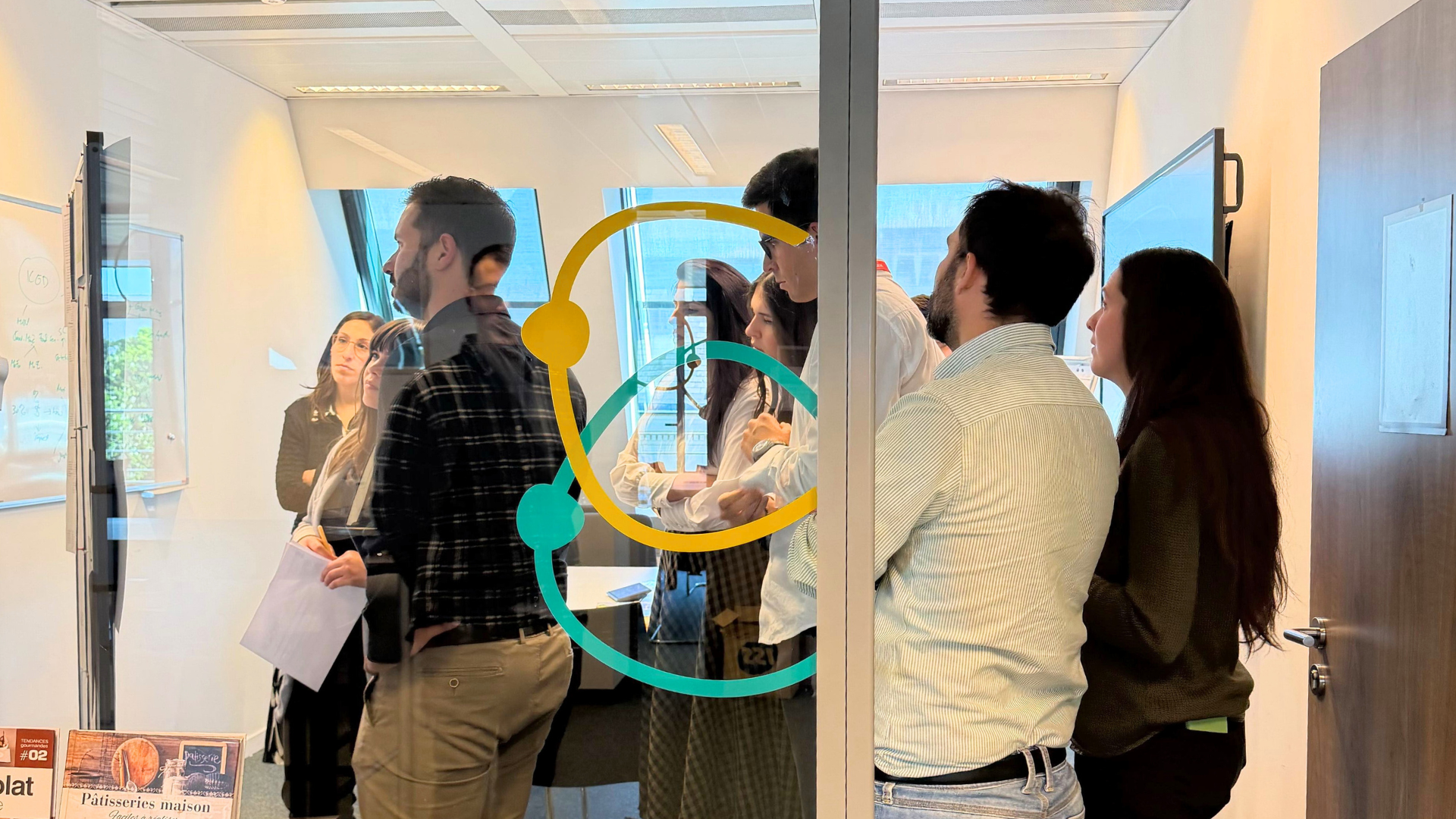
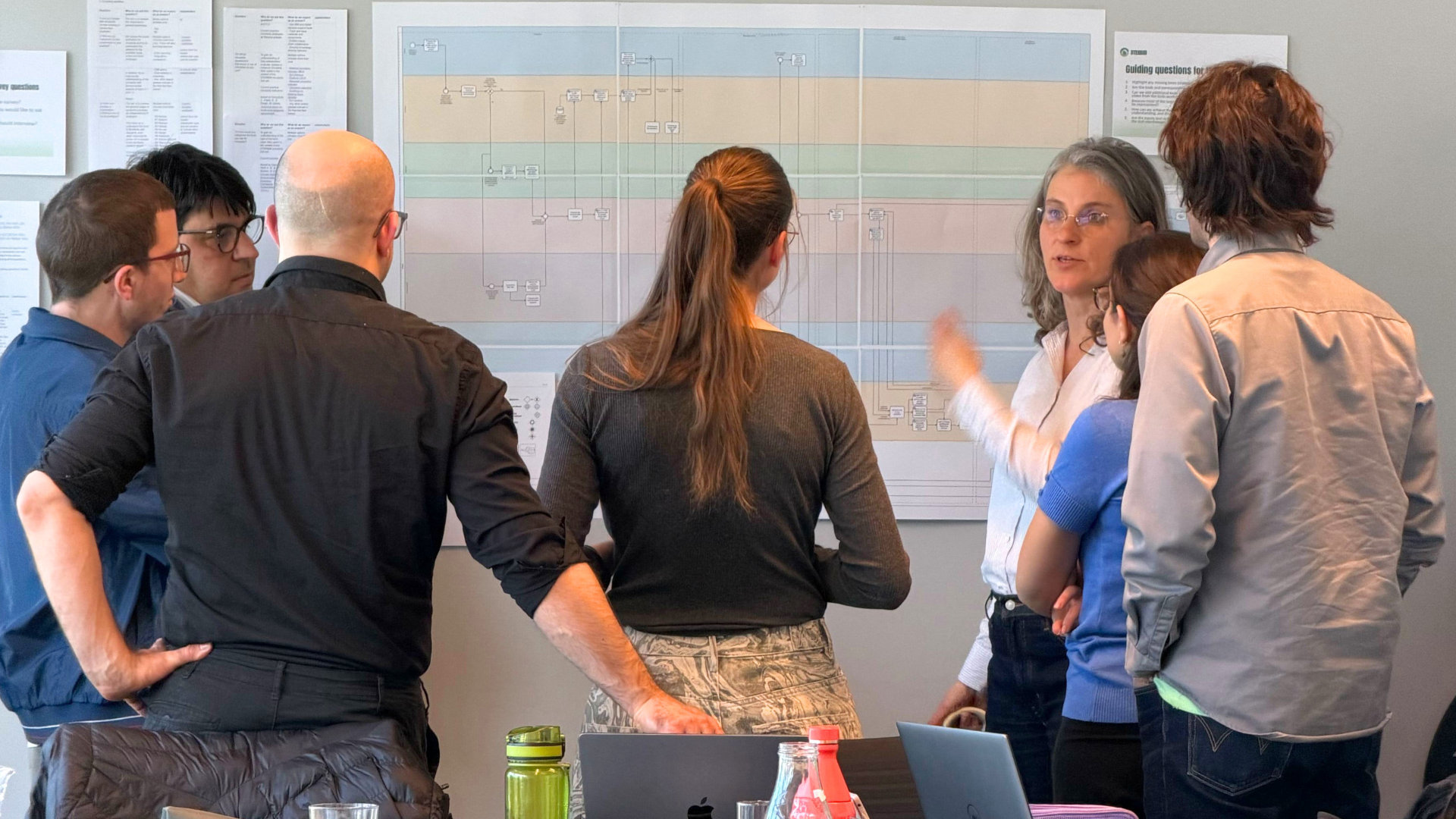
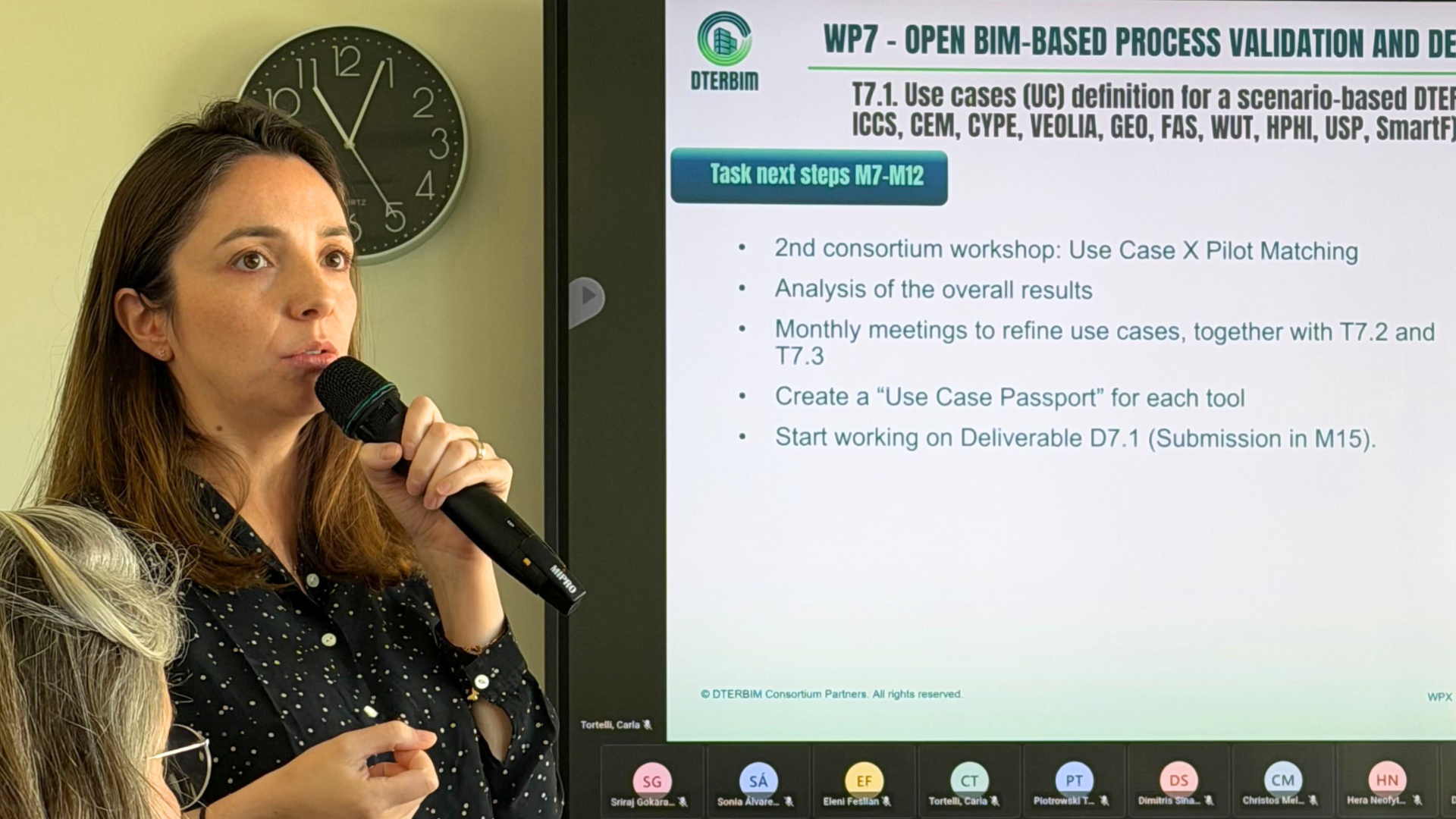
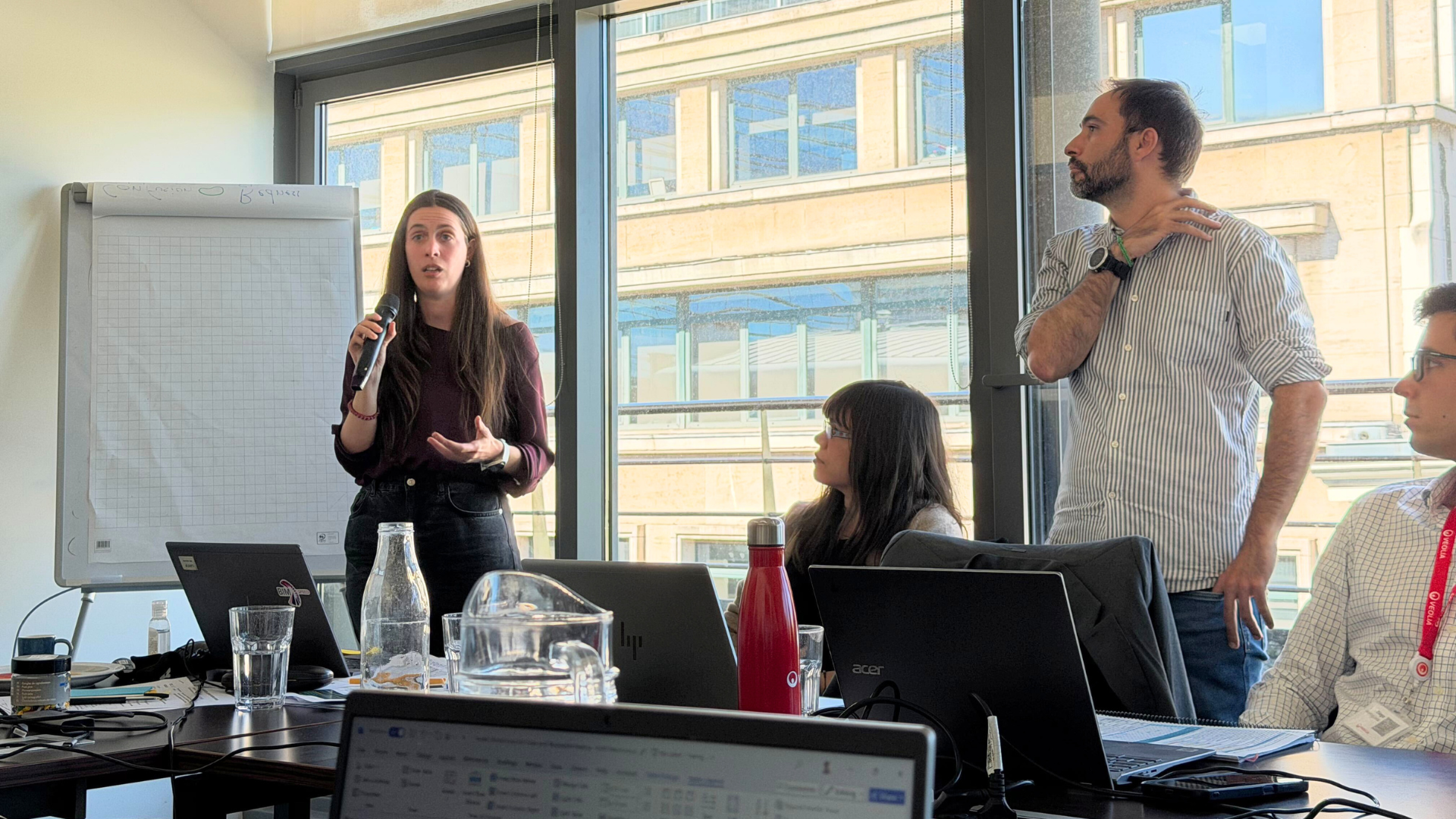
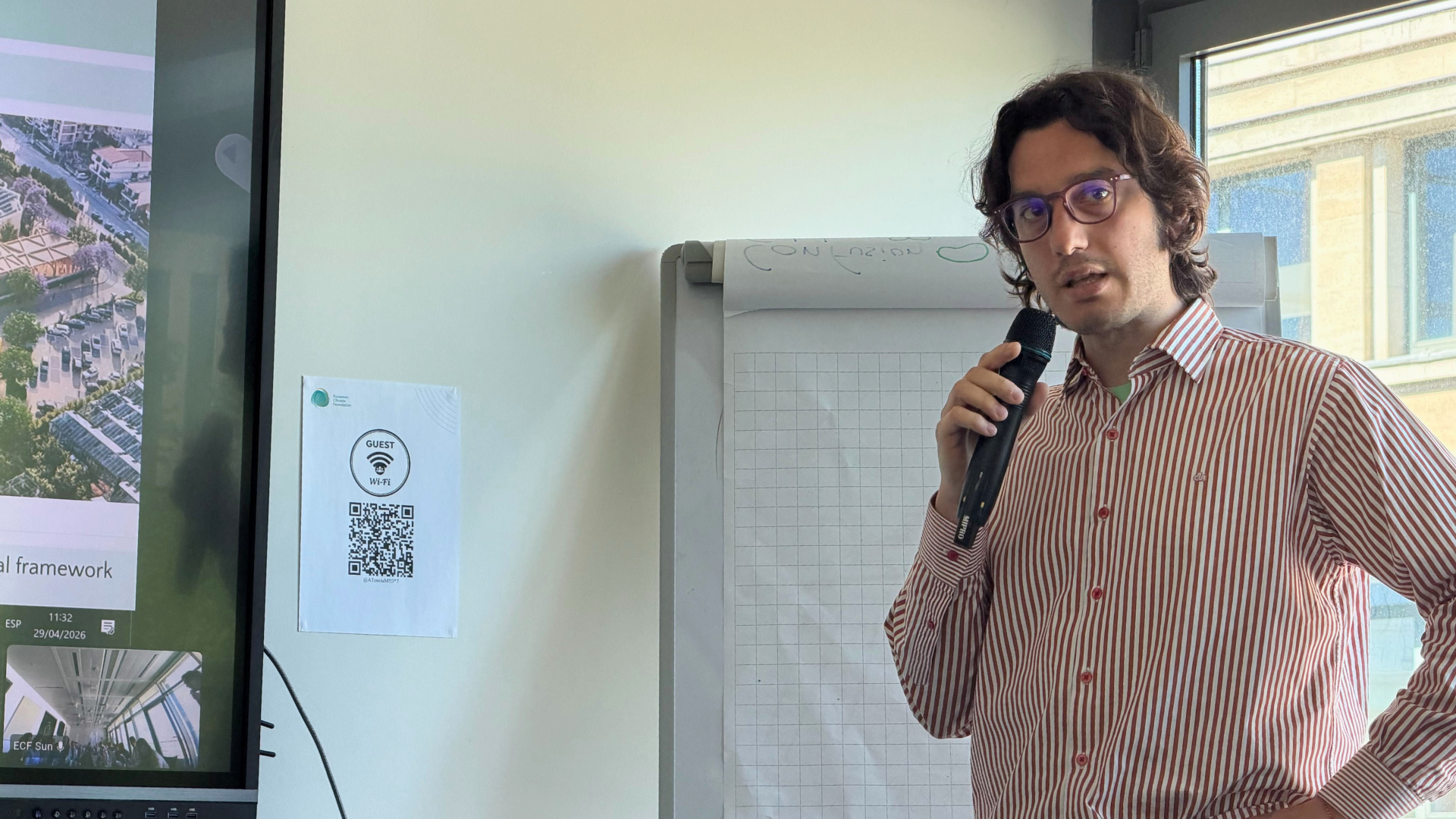
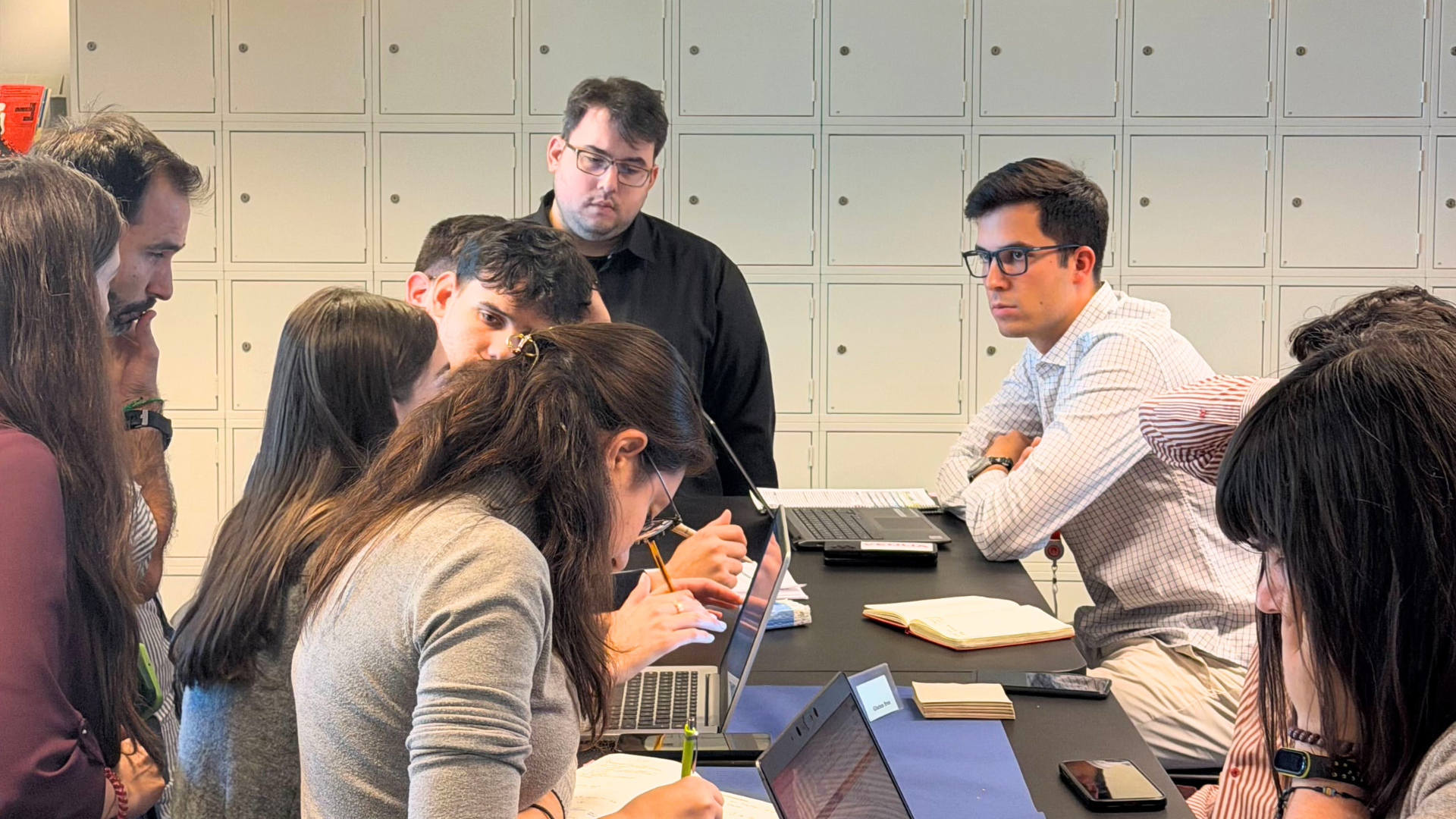
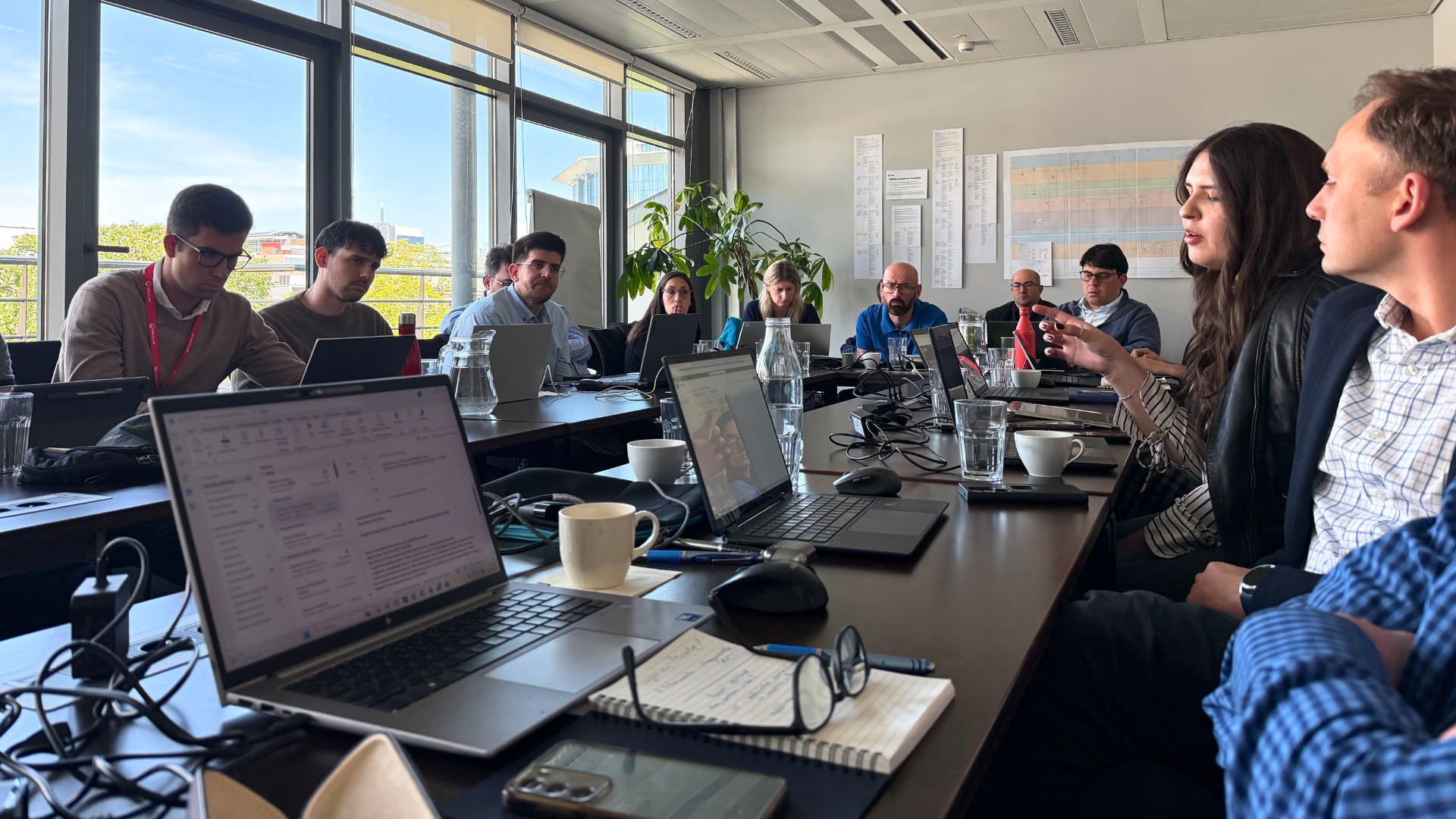
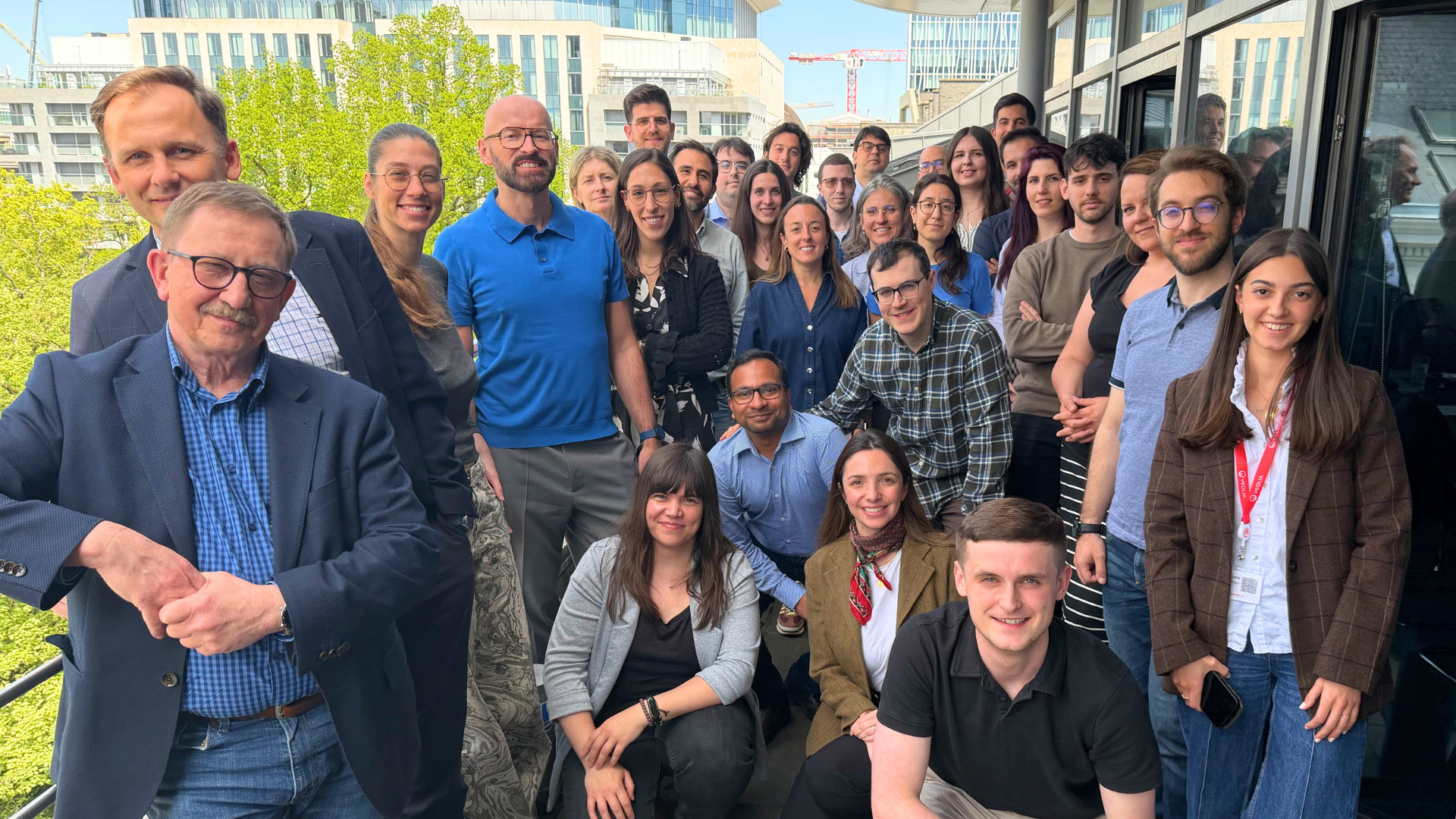
The DTERBIM team came together in Brussels for its first periodic meeting, an important milestone in the project’s first phase. Hosted by the Buildings Performance Institute Europe (BPIE) on 28 and 29 April 2026, the two-day meeting brought together representatives from the project’s 18 partner organisations to review progress, address challenges, and align on the next steps.
The meeting started with a welcome by BPIE and a project overview from the coordinating partner, CARTIF, followed by a review of progress across project management and coordination.
The session offered a valuable opportunity to reflect on the progress achieved so far and clarify priorities for the months ahead, as well as time to reconnect in person and coordinate across technical and pilot activities.
The discussions also highlighted a shared understanding across the consortium: innovation is not only about developing advanced digital tools, but about making them practical, efficient, and adaptable to the everyday realities of the renovation sector. Keeping solutions simple, useful, and shaped by the people who will use them will be an important focus in the months ahead.
Technical progress across the board
A significant part of the first day was dedicated to updates from the project’s core technical areas. Partners presented progress on the integrated BIM-based process definition, covering topics such as the development of circular energy renovation workflows, data needs and collection methodology based on openBIM standards, and approaches to BIM quality checking and enrichment.
Teams working on digital tools for efficient, circular and sustainable design and construction shared advances in several areas, including an SRI-aligned catalogue of energy conservation measures, early design tools integrating circularity and inclusiveness, semi-automatic upgrade of BIM models based on the DTERBIM catalogue, and a Building Material Passport for tracking construction products across their lifecycle. Updates on digital tools for operation, maintenance, and deconstruction (reuse and recycling) concluded the first day’s technical sessions.
Partners then presented progress on the DTERBIM interoperable openBIM framework, a key aspect of our mission to create a connected, standards-aligned digital ecosystem for the built environment.
The communications and dissemination team also reported on activities from the first phase, covering outreach, communication channels development, and early exploitation and innovation management planning.
Workshops: getting into detail
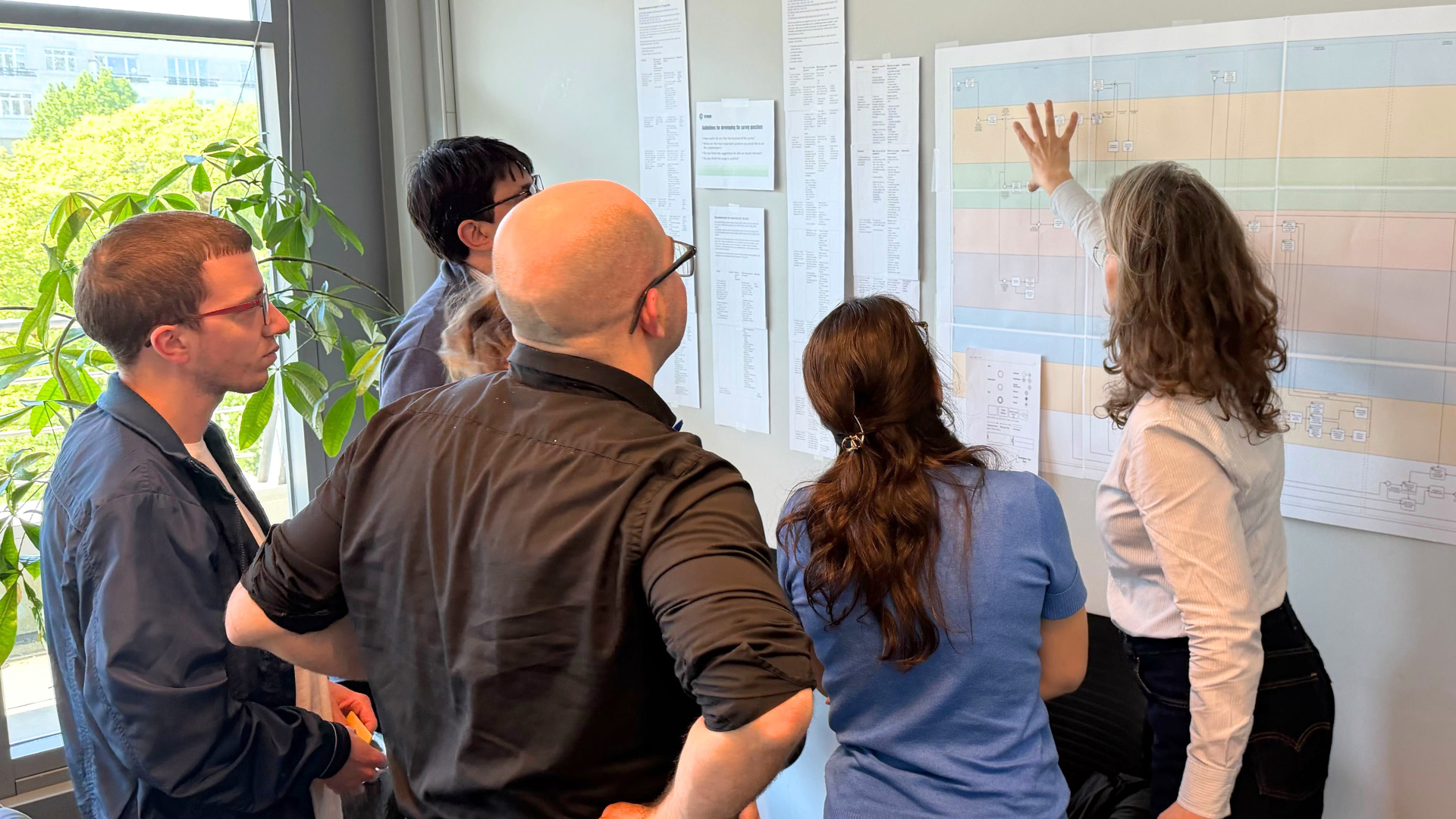
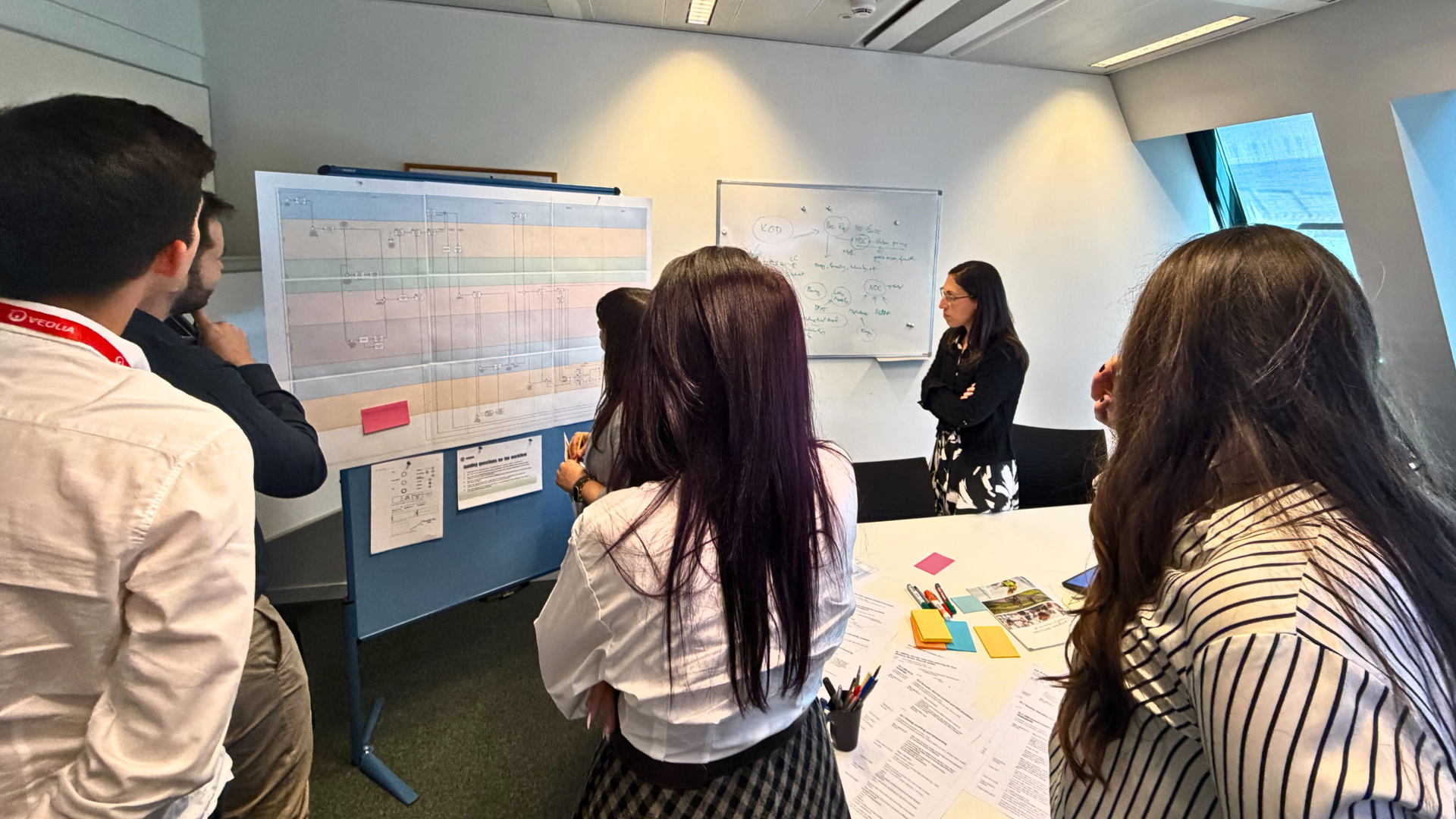
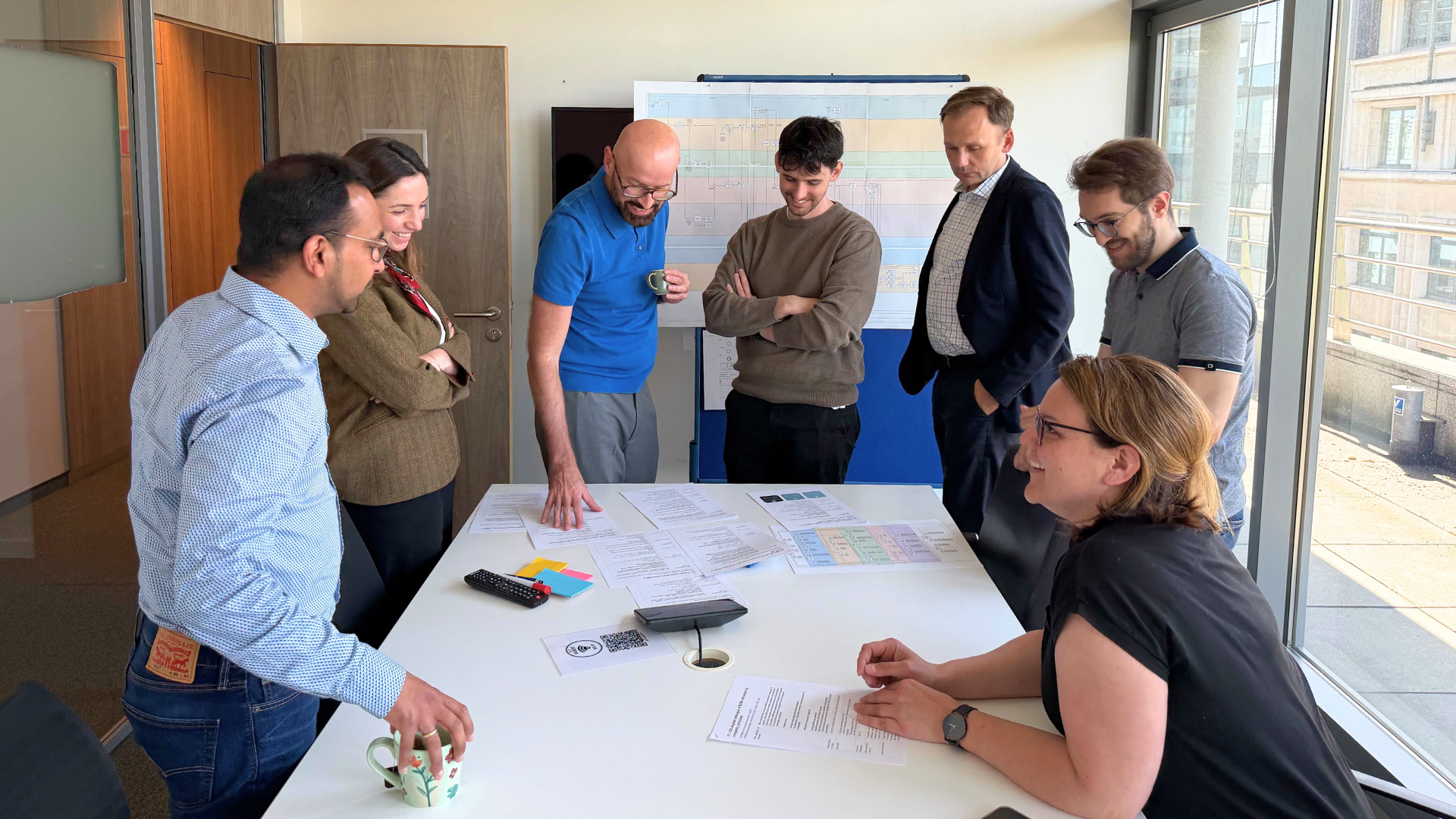
Two dedicated workshops gave partners the space to work collaboratively on some of the meeting’s most substantive topics. The first focused on the workflow for circular energy renovation supported by participatory approaches, a thread that connects technical development with real-world stakeholder engagement. The second centred on defining use cases for scenario-based process validation, a critical step towards ensuring that DTERBIM’s tools and methodologies hold up under real conditions.
Pilots take centre stage
Day two opened the floor to the project’s real-life and virtual pilot teams. Representatives from the Spanish, Greek, and Polish pilot sites, covering buildings in Valladolid, Athens, and Warsaw, respectively, presented their progress on data collection and preparation, a reminder that all the technical work ultimately lands in real buildings, with real obstacles and opportunities.
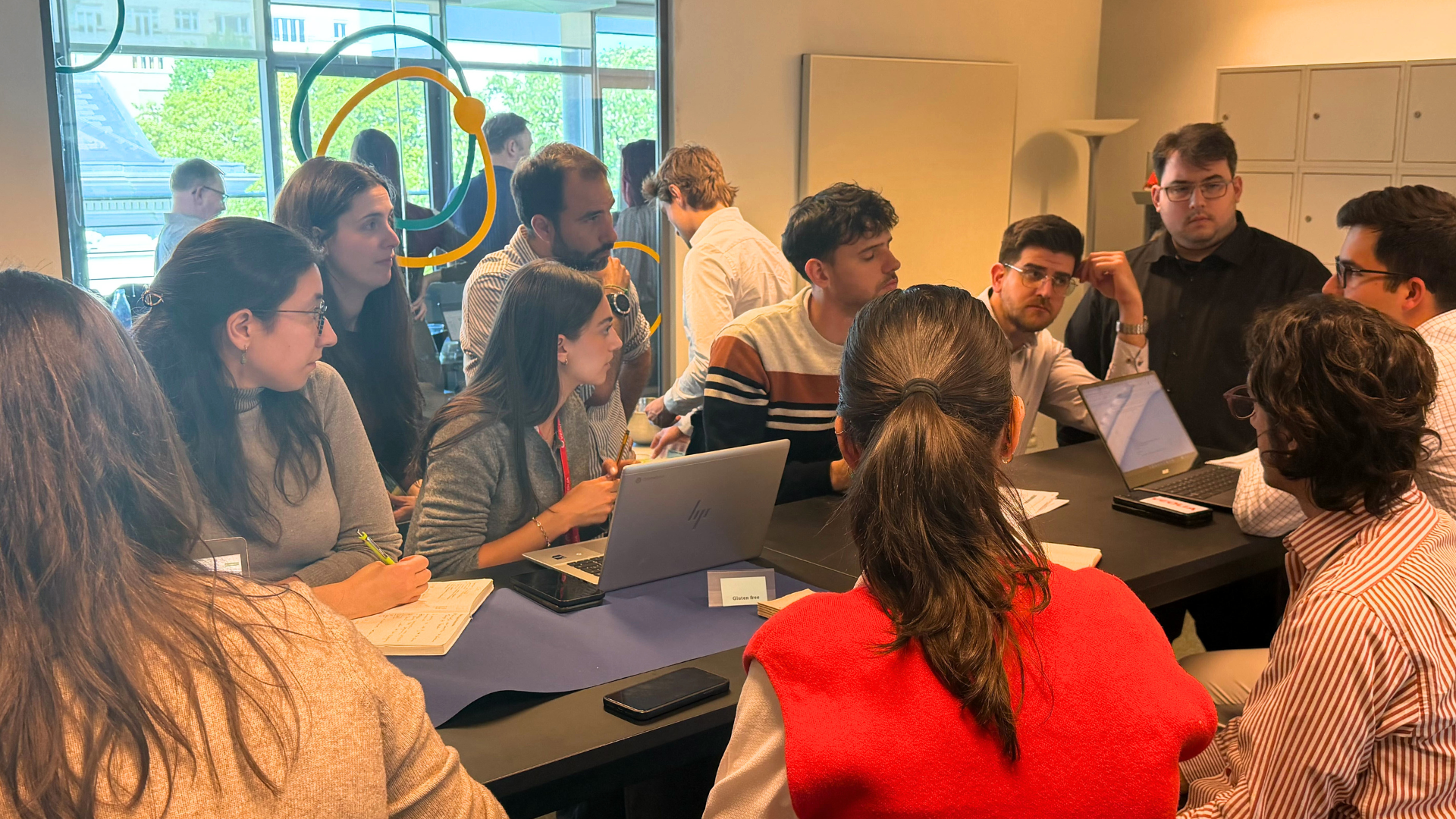
The meeting closed with a session on conclusions and open questions, giving the DTERBIM team an overview of key next steps. With pilots progressing, tools taking shape, and the openBIM framework advancing, DTERBIM is entering an exciting new phase.
Over the coming months, the consortium will focus on deepening the technical work, advancing pilot validation, and continuing to engage the wider sector, while demonstrating how digital tools can accelerate circular and energy-efficient renovation across Europe.
Subscribe for future updates, visit our website, and follow us on LinkedIn, Bluesky, X, and YouTube.