
How can we ensure that digital building models contain the information needed to support better renovation decisions? In this interview, Dimitrios Rovas, Professor of Building Simulation and Optimization at University College London (UCL), explains how his team is helping establish the BIM-based process, data requirements, and quality assurance methods on which DTERBIM relies, and reflects on the challenge of making digital building models more reliable.
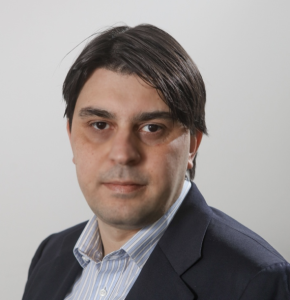
Let’s start with you. Could you briefly introduce yourself? What is your background, and what work do you focus on currently?
My name is Dimitrios Rovas, and I am a Professor of Building Simulation and Optimization at UCL, within the Bartlett School of Environment, Energy and Resources. My background is in mechanical engineering, but for more than a decade, my work has centred on information management: specifically, how digital building information can be made reliable enough to support decisions across a building’s whole life. This spans BIM-based data modelling, semantic sufficiency, and the enrichment of models to ensure they are fit for simulation and analysis. I have pursued these questions through a series of European projects, including COGITO, BIMERR, BuildON, CBIM, and DigiBUILD.
What do you enjoy most about your work? What keeps you motivated?
What I find most rewarding is working where research meets practice. The questions are genuinely difficult, yet the answers have to survive contact with real buildings and real project teams. I am motivated above all by the gap between what digital models could do and what they currently do; closing it means the information we produce becomes something practitioners can trust and reuse, rather than a model that is built once and then set aside. Watching a method move from a paper to a pilot site, and seeing it hold up there, is the part I enjoy most.
“Watching a method move from a paper to a pilot site, and seeing it hold up there, is the part I enjoy most.”
Now let’s zoom in on your role within DTERBIM. What is your team responsible for? What challenge are you addressing?
UCL leads Work Package 3, which defines the integrated, BIM-based process on which the rest of DTERBIM is built. In practice, this means we are responsible for establishing how information should flow across a building’s lifecycle, from early design through to eventual deconstruction, and for ensuring that the digital models and tools used along the way share a common, open language.
We coordinate the partners who specify what data each stage requires, who define the openBIM tools and standards that carry it, and who prepare the pilot building models so that they are fit for the analyses the project depends on.
UCL’s own technical contribution lies in two areas in particular:
- assessing whether each pilot model holds enough information for its intended use,
- and developing the methodology for checking, correcting, and enriching those models where it does not.
The challenge is a long-standing one in the sector. Building models are usually produced for a single purpose, such as design or visualisation, and are then reused for tasks they were never prepared for, such as energy simulation, automated compliance checking, or lifecycle and circularity assessment. When information is missing or inconsistent, whether incomplete heating and cooling data, undefined space boundaries, or weak links between static and sensor data, those analyses become unreliable or impossible. Our work establishes how to systematically identify these gaps and close them, so that the pilot models become dependable digital assets for the whole project.
“Building models are usually produced for a single purpose, such as design or visualisation, and are then reused for tasks they were never prepared for.”
What has your team achieved so far? And what are your main goals for the next phase of the project?
The work has started strongly, and much of this first year has gone into understanding the problem and beginning to build the foundations on which the rest of the project will stand. This remains very much an ongoing process. We are working with the partners to understand what information and data each stage of a renovation actually requires, and to express those requirements in open, machine-readable standards; in parallel, we have started to examine the existing models for the three pilots in Spain, Poland, and Greece, gradually building a picture of where they are complete and where they fall short.
For the next phase, our priorities are to consolidate the data sufficiency analysis and to develop a practical enrichment methodology; this is a clear set of guidelines that partners can follow to raise the quality of their models, improve geometry and semantic consistency, and add the information needed for reliable energy and circularity analysis. Because these outputs feed into the design, construction, and operation tools developed elsewhere in DTERBIM, establishing the underlying process carefully now matters a great deal for what follows.
In your view, what is the most significant impact DTERBIM could have on the construction sector? What changes would you like to see as a result of your work on the project?
The most significant impact, in my view, would be to make high-quality, information-rich building models the norm rather than the exception. At present, a great deal of effort across the sector is wasted because digital models cannot be trusted to support the analyses we want to run on them; people fall back on manual checks, re-enter data, or forgo the more advanced assessments altogether.
“The most significant impact, in my view, would be to make high-quality, information-rich building models the norm rather than the exception.”
If DTERBIM succeeds, I would like to see two changes in particular. First, that checking and enriching a model against clear, shared information requirements becomes a routine, semi-automated step rather than a bespoke struggle each time. Second, that this reliability unlocks better decisions across the building lifecycle: more confident energy renovation, genuine material reuse, and digital twins that practitioners actually depend on. The wider ambition is a built environment in which good data quality is the foundation for lower-carbon, lower-cost, and more circular renovation.
This is the first in a series of interviews with DTERBIM partners, highlighting the people, expertise, and innovations driving the project forward.
Want to meet more of the experts behind DTERBIM? Follow us on LinkedIn, Bluesky, X, and YouTube, and subscribe to our newsletter for future interviews and project updates.