
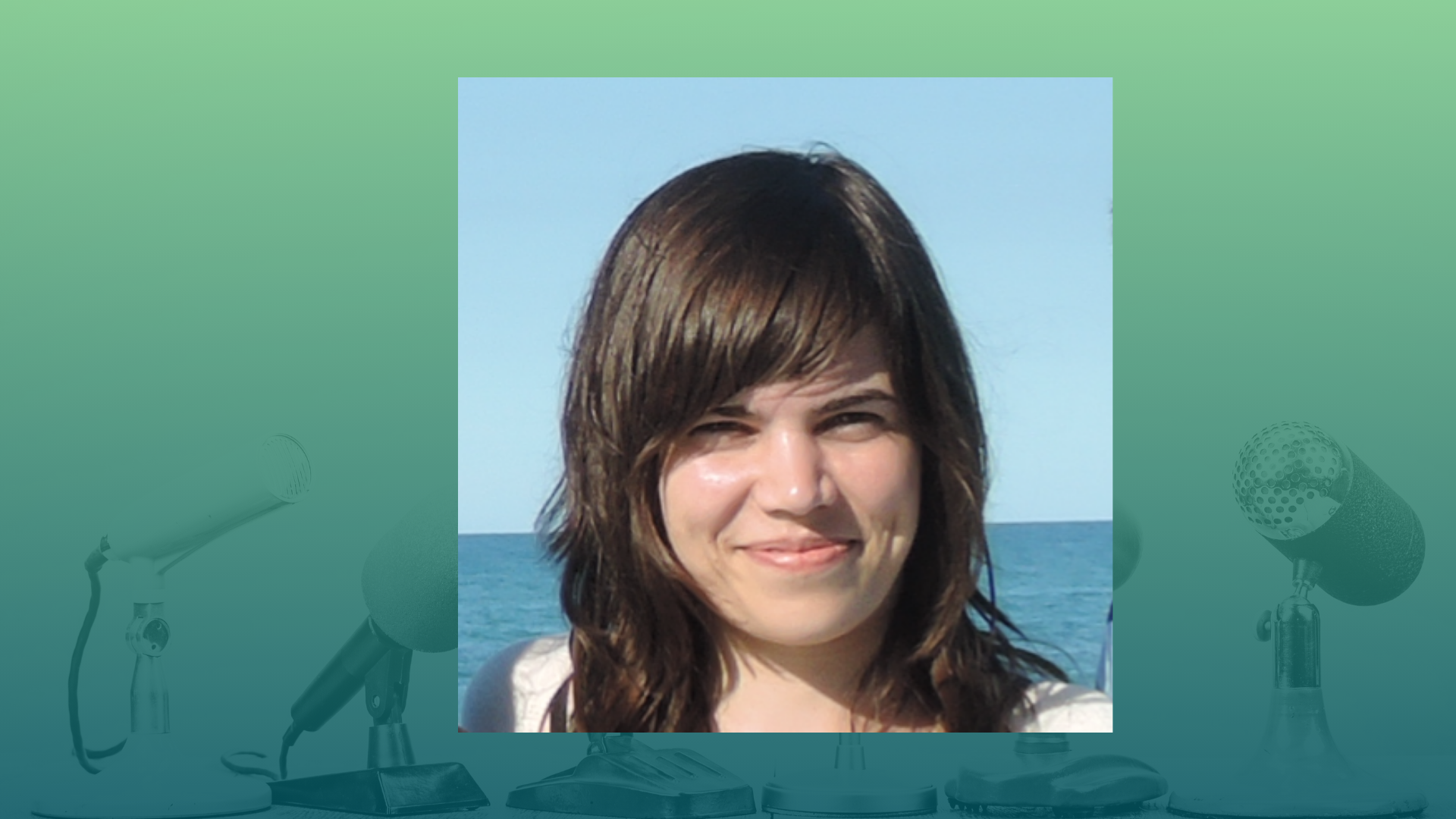
Sonia Álvarez Díaz, DTERBIM Project Coordinator at CARTIF: "One of the greatest impacts of DTERBIM will be to demonstrate how digitalisation can transform the way we design, renovate and manage buildings"
Delivering a Horizon Europe project goes far beyond developing innovative technologies. It also means bringing together partners with different areas of expertise, aligning technical and strategic objectives, and ensuring that research translates into practical solutions. In this edition of our #DTERBIMVoices series, we speak with Sonia Álvarez Díaz, Project Coordinator of DTERBIM and researcher at CARTIF Technology Centre. With a background in architecture, Sonia shares what motivates her and why collaboration is key to driving the digital and circular transformation of Europe's construction sector.
To begin, could you tell us a little about yourself? What is your background, and what does your work at CARTIF focus on today?
I am Sonia Álvarez Díaz, an architect and researcher in the Energy Division of CARTIF Technology Centre, within the Energy Efficiency Area. I hold a PhD in Architecture, focused on the use of BIM and advanced digital technologies for energy-efficient building renovation projects, as well as a Master’s degree in Technologies for the Protection of Immovable Cultural Heritage.
My current work focuses mainly on the application of digital technologies to energy efficiency management, building and urban renovation, and semantic 3D modelling through GIS and BIM technologies, as well as their connection with Digital Twins.
What aspects of your work do you find most rewarding? What continues to inspire and motivate you?
What I enjoy most is the variety of topics I work on, mainly related to the use of digital technologies in the built environment to improve energy efficiency, from building scale to city scale. I also value the more practical side of my work, such as on-site data collection for building digitalisation and energy audits, as well as the development of decarbonisation plans and energy improvement strategies. This keeps me closely connected to real buildings and real challenges.
What keeps me motivated is learning. I really enjoy learning about new topics, proposing new ideas, and applying them in both proposals and real projects.
"What keeps me motivated is learning. I really enjoy learning about new topics, proposing new ideas, and applying them both in proposals and in real projects."
As DTERBIM's Project Coordinator, what are your main responsibilities? What challenges are you adressing?
Within DTERBIM, I have several responsibilities. My main role is as Project Coordinator, but I am also involved in the technical development of the project. As Project Coordinator, my focus is on ensuring that all technical, organisational and strategic elements of DTERBIM move in the same direction. I would say this is one of the main challenges of the project.
"As Project Coordinator, my focus is on ensuring that all technical, organisational and strategic elements of DTERBIM move in the same direction."
Looking at the first months of the project, what have been the main achievements? And what priorities lie ahead?
From a coordination perspective, starting a European project always requires a significant effort in terms of management, administration, and technical alignment. During these first months, we have focused on setting up the project structure, supporting the consortium, clarifying initial questions, and addressing the first issues that naturally arise in a project involving 18 partners and three real demonstration sites.
One of the closest objectives at the project level is to have the first definition of the BIM-based renovation and new construction processes across the complete building lifecycle. This will be a collaborative process, based on the analysis of stakeholders' needs, barriers, and challenges in business-as-usual circular and energy renovation practices. This participatory approach is essential to ensure that the solutions developed in DTERBIM are relevant, scalable, interoperable, and useful for the sector.
What impact do you hope DTERBIM will have on the construction sector?
At the general project level, I believe one of the greatest impacts of DTERBIM will be to demonstrate how digitalisation can transform the way we design, renovate, and manage buildings, integrating circularity to achieve more efficient and sustainable processes.
"One of the greatest impacts of DTERBIM will be to demonstrate how digitalisation can transform the way we design, renovate, and manage buildings, integrating circularity to achieve more efficient and sustainable processes."
As a result of our work, I would like to see the Architecture, Engineering, and Construction (AEC) sector move towards a more innovative, sustainable and connected model, where Small and medium-sized enterprises (SMEs) in particular can engage more easily with a collaborative digital ecosystem through the DTERBIM Toolkit and its accessible, cost-effective and easy-to-use digital solutions.
"I would like to see the AEC sector move towards a more innovative, sustainable and connected model, where SMEs can engage more easily with a collaborative digital ecosystem through the DTERBIM Toolkit."
This is the fourth in a series of interviews with DTERBIM partners, highlighting the people, stories, and ideas driving the project forward.
Want to meet more of the experts behind DTERBIM? Follow us on LinkedIn, Bluesky, X, and YouTube, and subscribe to our newsletter for future interviews and project updates.

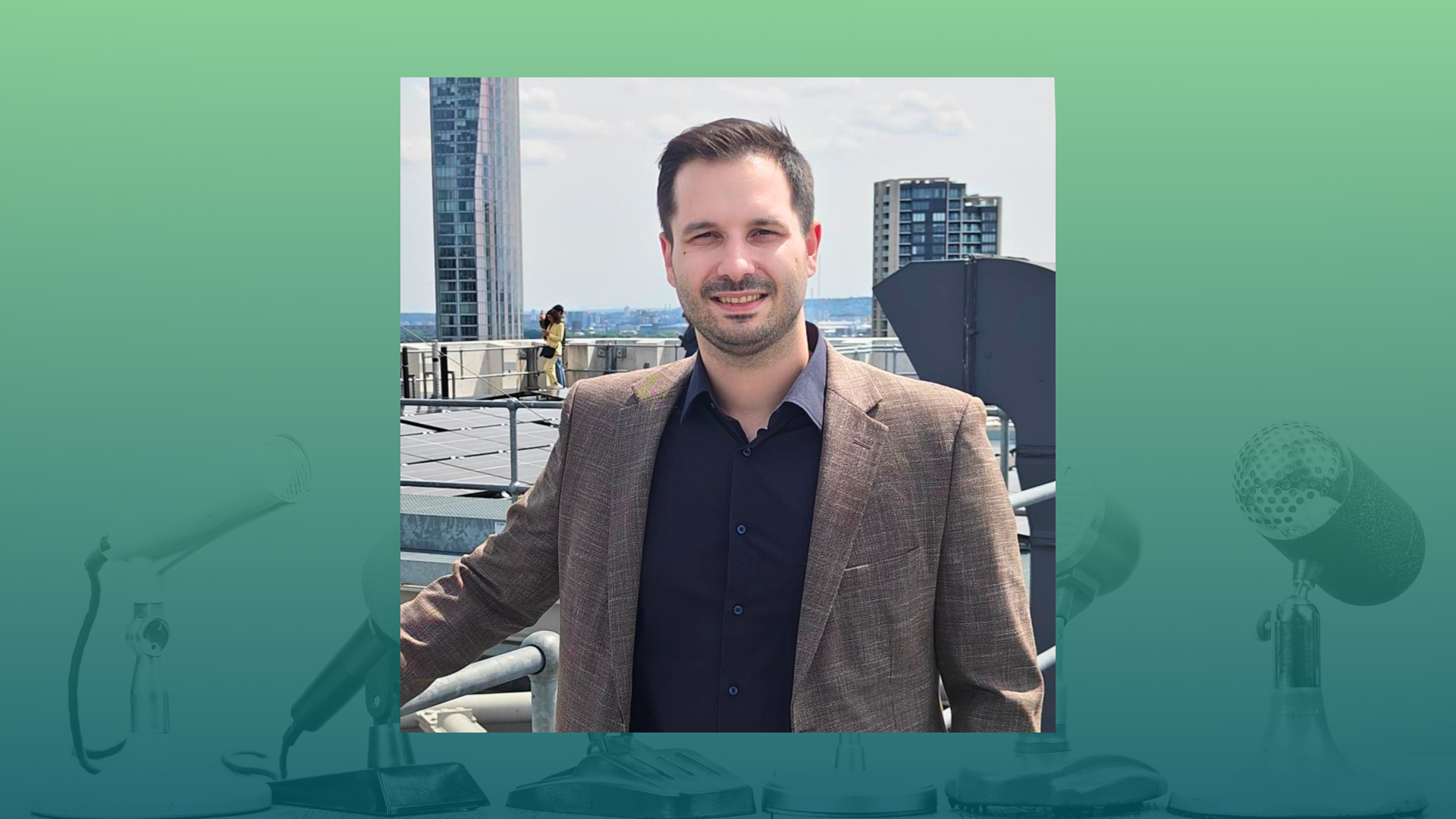
Stathis Stamatopoulos (ICCS/NTUA): "I enjoy when something abstract (a model, a forecast, an algorithm) becomes a decision that improves how a real building runs"
What does it take to make a building "smart"? For Stathis Stamatopoulos, researcher at the Institute of Communication and Computer Systems (ICCS/NTUA), it comes down to turning data into decisions; forecasts that lower energy bills, simulations that improve comfort, and tools that help design better buildings before construction even begins.
In this interview, Stathis tells us about his work leading the development of AI-based operation tools and an early design tool for DTERBIM, and why he believes digital twins should one day be as common as central heating.
Could you briefly introduce yourself? What is your background, and what kind of work do you focus on currently?
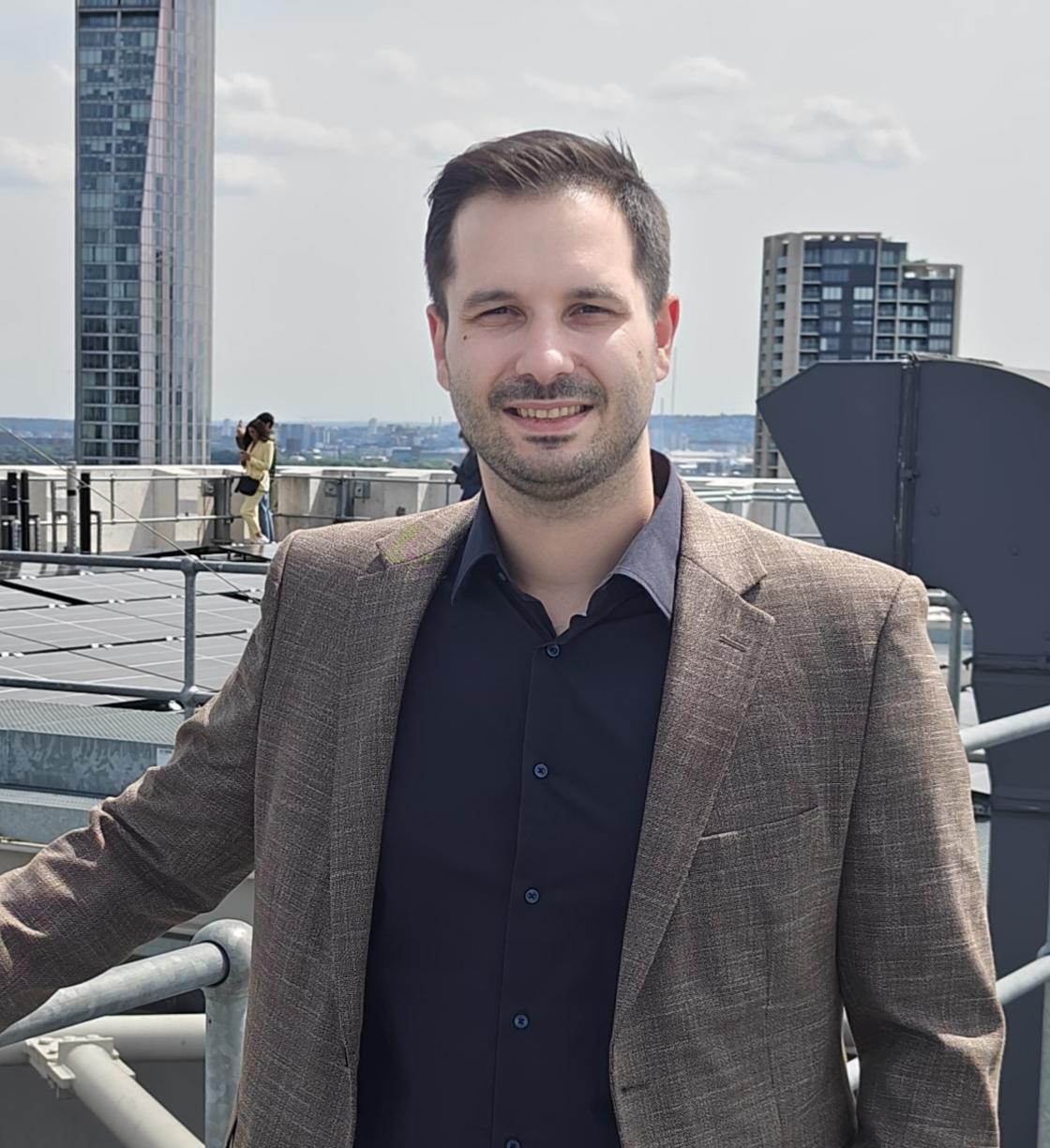
I am Stathis Stamatopoulos, researcher at the Institute of Communication and Computer Systems (ICCS), the research arm of the School of Electrical and Computer Engineers of the National Technical University of Athens.
I hold an Engineer Master's degree in Electrical and Computer Engineering, and I am currently a doctoral candidate in decision support systems utilising machine learning techniques in buildings. Today, I work mainly on Horizon Europe projects, managing technical project teams but also supporting research and technical developments.
In DTERBIM, I lead Work Package 5 (WP5), "Digital tools for optimal Operation & Maintenance and Deconstruction." WP5 is, in a sense, where DTERBIM meets the real world: it covers everything that happens after a building is designed and built.
On one side, we develop the tools that keep a building running well day to day, while on the other, WP5 also looks at the end of a building's life. ICCS leads WP5 as a whole and is directly responsible for the AI-based energy profiling and the indoor environmental quality simulation and optimisation.
What do you enjoy most about your work? What keeps you motivated?
I enjoy the moment when something abstract (a model, a forecast, an algorithm) becomes a decision that improves how a real building runs. Energy bills drop, comfort improves, and a maintenance issue is caught before it becomes a failure. That tangibility is rare in research, and it keeps the work grounded. I'm also motivated by the dynamic environment of European research and innovation: every year brings new challenges to tackle, new partners to work with, and new ideas to test, and that constant movement is what keeps the work exciting.
"I enjoy the moment when something abstract (a model, a forecast, an algorithm) becomes a decision that improves how a real building runs."
Now let's zoom in on your role within DTERBIM. What is your team responsible for, and what challenge are you addressing?
In WP5, the ICCS team directly leads two of the most data- and AI-intensive tasks. Our team is building the scalable workflows and AI models that turn raw energy data into operational intelligence.
We work with deep learning architectures alongside gradient-boosting trees to produce high-resolution energy profiles and forecasts at device, room, and whole-building levels.
We also address the fact that "comfort" is multidimensional: it includes thermal conditions, as well as acoustics, lighting, and visual comfort, and these dimensions interact. We are building a simulation and optimisation framework that fuses static BIM data with real-time sensor streams and evaluates operational plans against established references.
We are also developing dynamic thermal simulation models that predict indoor temperature and humidity, and predictive algorithms that model occupant behaviour and interactions with the spaces they use. In collaboration with the IEQ optimisation service, our aim is to achieve adaptive comfort: HVAC (Heating, Ventilation, and Air Conditioning) setpoints that adjust automatically to actual preferences and usage patterns rather than a fixed schedule.
Beyond operational methodologies and tools, ICCS also leads the development of the "Early design tool supporting efficiency, circularity and inclusiveness", which sits at the opposite end of the building lifecycle. ICCS develops a decision-support tool that helps designers, owners, and investors compare design and renovation scenarios on energy, cost, environmental, sustainability, circularity, and accessibility indicators before a building is built or refurbished.
"We are developing a decision-support tool that helps designers, owners, and investors compare design and renovation scenarios on energy, cost, environmental, sustainability, circularity, and accessibility indicators before a building is built or refurbished."
What has your team achieved so far, and what are your main goals for the next phase of the project?
In this first year, our most visible progress as ICCS has been on the early design tool. It is one of the first tasks to deliver tangible technical output in DTERBIM. It started early in Month 2 and, as a result, has already moved beyond specifications into a working interface and a first set of functionalities.
We have designed the user interface, implemented the first functionalities that allow designers, owners, and investors to compose and compare early designs, and put those early versions in front of relevant stakeholders to gather structured feedback.
For the next phase, our priorities are clear. First, we will deliver the early design tool, refined based on stakeholder feedback and ready to support the design-stage release of the DTERBIM Toolkit. Second, we push our other activities from their methodological foundations into running implementations.
In your view, what is the most significant impact DTERBIM could have on the construction sector? What changes would you like to see as a result of your work on the project?
From the work that ICCS leads in DTERBIM, two concrete shifts matter most to me. First, better decisions earlier: design tools that put energy, cost, environmental, circularity, and accessibility indicators in front of designers and owners when changing course is still cheap. Second, buildings that are operated proactively rather than reactively: AI services that anticipate inefficiencies, comfort issues, or failures before they happen, and that close the long-standing trade-off between energy performance and occupant comfort.
The change I want to see is cultural: digital twins moving from a technology buzzword to a piece of everyday infrastructure that owners, facility managers, ESCOs (Energy Service Companies), designers, and even occupants rely on without thinking about it.
If five years from now, a mid-sized building owner in Europe expects to operate their building with a digital twin the same way they expect to have heating, then DTERBIM will have made a real difference.
"If five years from now a mid-sized building owner in Europe expects to operate their building with a digital twin the same way they expect to have heating, then DTERBIM will have made a real difference."
This is the second in a series of interviews with DTERBIM partners, highlighting the people, expertise, and innovations driving the project forward.
Want to meet more of the experts behind DTERBIM? Follow us on LinkedIn, Bluesky, X, and YouTube, and subscribe to our newsletter for future interviews and project updates.