
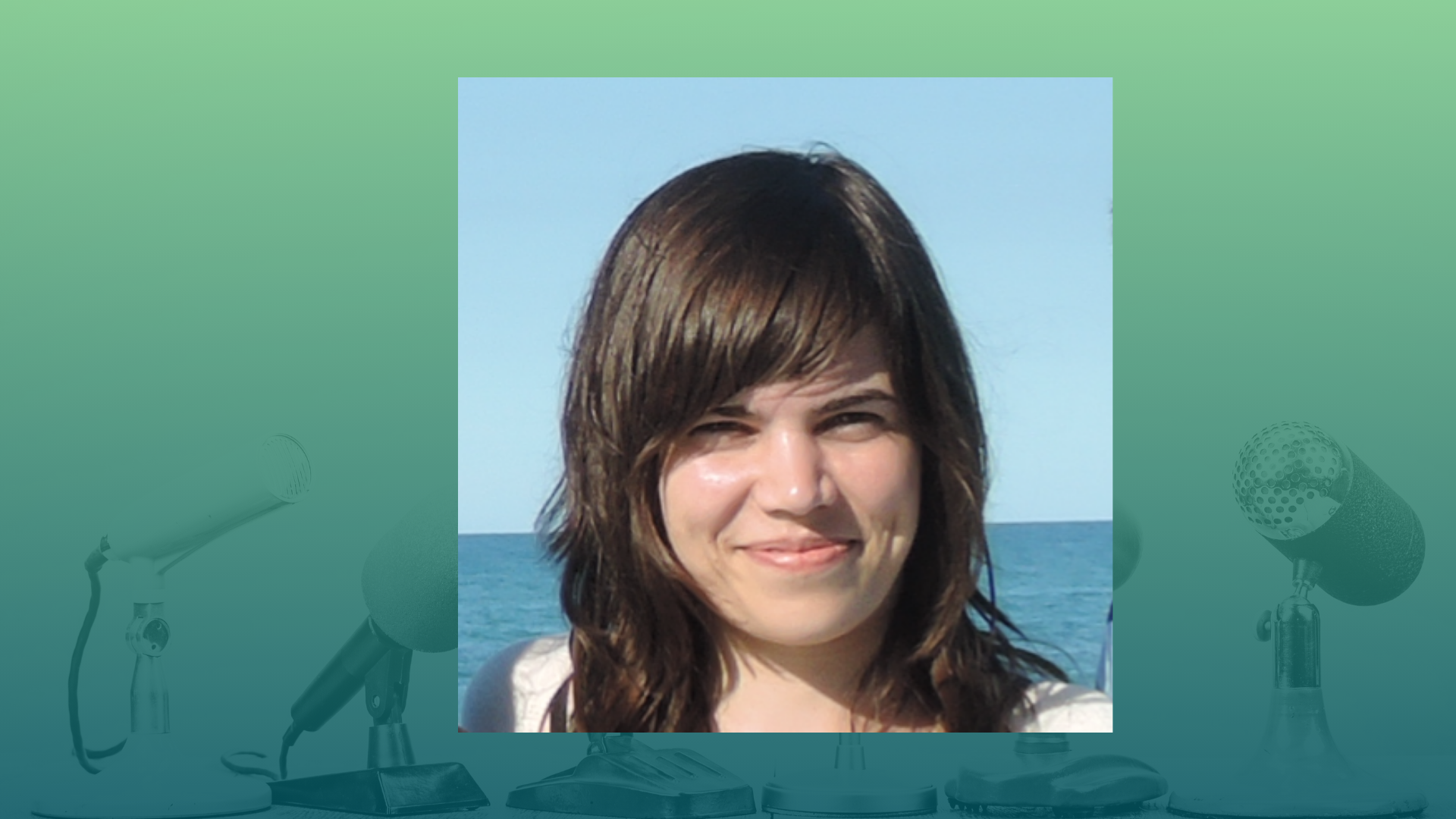
Sonia Álvarez Díaz, DTERBIM Project Coordinator at CARTIF: "One of the greatest impacts of DTERBIM will be to demonstrate how digitalisation can transform the way we design, renovate and manage buildings"
Delivering a Horizon Europe project goes far beyond developing innovative technologies. It also means bringing together partners with different areas of expertise, aligning technical and strategic objectives, and ensuring that research translates into practical solutions. In this edition of our #DTERBIMVoices series, we speak with Sonia Álvarez Díaz, Project Coordinator of DTERBIM and researcher at CARTIF Technology Centre. With a background in architecture, Sonia shares what motivates her and why collaboration is key to driving the digital and circular transformation of Europe's construction sector.
To begin, could you tell us a little about yourself? What is your background, and what does your work at CARTIF focus on today?
I am Sonia Álvarez Díaz, an architect and researcher in the Energy Division of CARTIF Technology Centre, within the Energy Efficiency Area. I hold a PhD in Architecture, focused on the use of BIM and advanced digital technologies for energy-efficient building renovation projects, as well as a Master’s degree in Technologies for the Protection of Immovable Cultural Heritage.
My current work focuses mainly on the application of digital technologies to energy efficiency management, building and urban renovation, and semantic 3D modelling through GIS and BIM technologies, as well as their connection with Digital Twins.
What aspects of your work do you find most rewarding? What continues to inspire and motivate you?
What I enjoy most is the variety of topics I work on, mainly related to the use of digital technologies in the built environment to improve energy efficiency, from building scale to city scale. I also value the more practical side of my work, such as on-site data collection for building digitalisation and energy audits, as well as the development of decarbonisation plans and energy improvement strategies. This keeps me closely connected to real buildings and real challenges.
What keeps me motivated is learning. I really enjoy learning about new topics, proposing new ideas, and applying them in both proposals and real projects.
"What keeps me motivated is learning. I really enjoy learning about new topics, proposing new ideas, and applying them both in proposals and in real projects."
As DTERBIM's Project Coordinator, what are your main responsibilities? What challenges are you adressing?
Within DTERBIM, I have several responsibilities. My main role is as Project Coordinator, but I am also involved in the technical development of the project. As Project Coordinator, my focus is on ensuring that all technical, organisational and strategic elements of DTERBIM move in the same direction. I would say this is one of the main challenges of the project.
"As Project Coordinator, my focus is on ensuring that all technical, organisational and strategic elements of DTERBIM move in the same direction."
Looking at the first months of the project, what have been the main achievements? And what priorities lie ahead?
From a coordination perspective, starting a European project always requires a significant effort in terms of management, administration, and technical alignment. During these first months, we have focused on setting up the project structure, supporting the consortium, clarifying initial questions, and addressing the first issues that naturally arise in a project involving 18 partners and three real demonstration sites.
One of the closest objectives at the project level is to have the first definition of the BIM-based renovation and new construction processes across the complete building lifecycle. This will be a collaborative process, based on the analysis of stakeholders' needs, barriers, and challenges in business-as-usual circular and energy renovation practices. This participatory approach is essential to ensure that the solutions developed in DTERBIM are relevant, scalable, interoperable, and useful for the sector.
What impact do you hope DTERBIM will have on the construction sector?
At the general project level, I believe one of the greatest impacts of DTERBIM will be to demonstrate how digitalisation can transform the way we design, renovate, and manage buildings, integrating circularity to achieve more efficient and sustainable processes.
"One of the greatest impacts of DTERBIM will be to demonstrate how digitalisation can transform the way we design, renovate, and manage buildings, integrating circularity to achieve more efficient and sustainable processes."
As a result of our work, I would like to see the Architecture, Engineering, and Construction (AEC) sector move towards a more innovative, sustainable and connected model, where Small and medium-sized enterprises (SMEs) in particular can engage more easily with a collaborative digital ecosystem through the DTERBIM Toolkit and its accessible, cost-effective and easy-to-use digital solutions.
"I would like to see the AEC sector move towards a more innovative, sustainable and connected model, where SMEs can engage more easily with a collaborative digital ecosystem through the DTERBIM Toolkit."
This is the fourth in a series of interviews with DTERBIM partners, highlighting the people, stories, and ideas driving the project forward.
Want to meet more of the experts behind DTERBIM? Follow us on LinkedIn, Bluesky, X, and YouTube, and subscribe to our newsletter for future interviews and project updates.


DTERBIM Newsletter #3: DTERBIM Voices, latest updates, and upcoming opportunities
The third edition of the DTERBIM newsletter includes our most recent milestones, partner activities, upcoming events, and selected news from across the digital, circular, and energy-efficient construction sector.
What’s inside this third edition?
This newsletter features the launch of DTERBIM Voices, our new interview series highlighting the people, expertise, and ideas driving our work forward. The first interviews feature Dimitrios Rovas (University College London) and Stathis Stamatopoulos (ICCS/NTUA), who share how their teams are contributing to the development of solutions for smarter building renovation.
It also contains updates from our partners, highlights from our first periodic meeting in Brussels, details of upcoming events, such as the webinar on 9 July, where our coordinator, Sonia Álvarez (CARTIF), will present our work and discuss how Digital Twins and AI can help build more climate-resilient cities, and a curated selection of insightful resources on construction innovation.
Read the DTERBIM newsletter #3
Subscribe for future updates, visit our website, and follow us on LinkedIn, Bluesky, X, and YouTube.
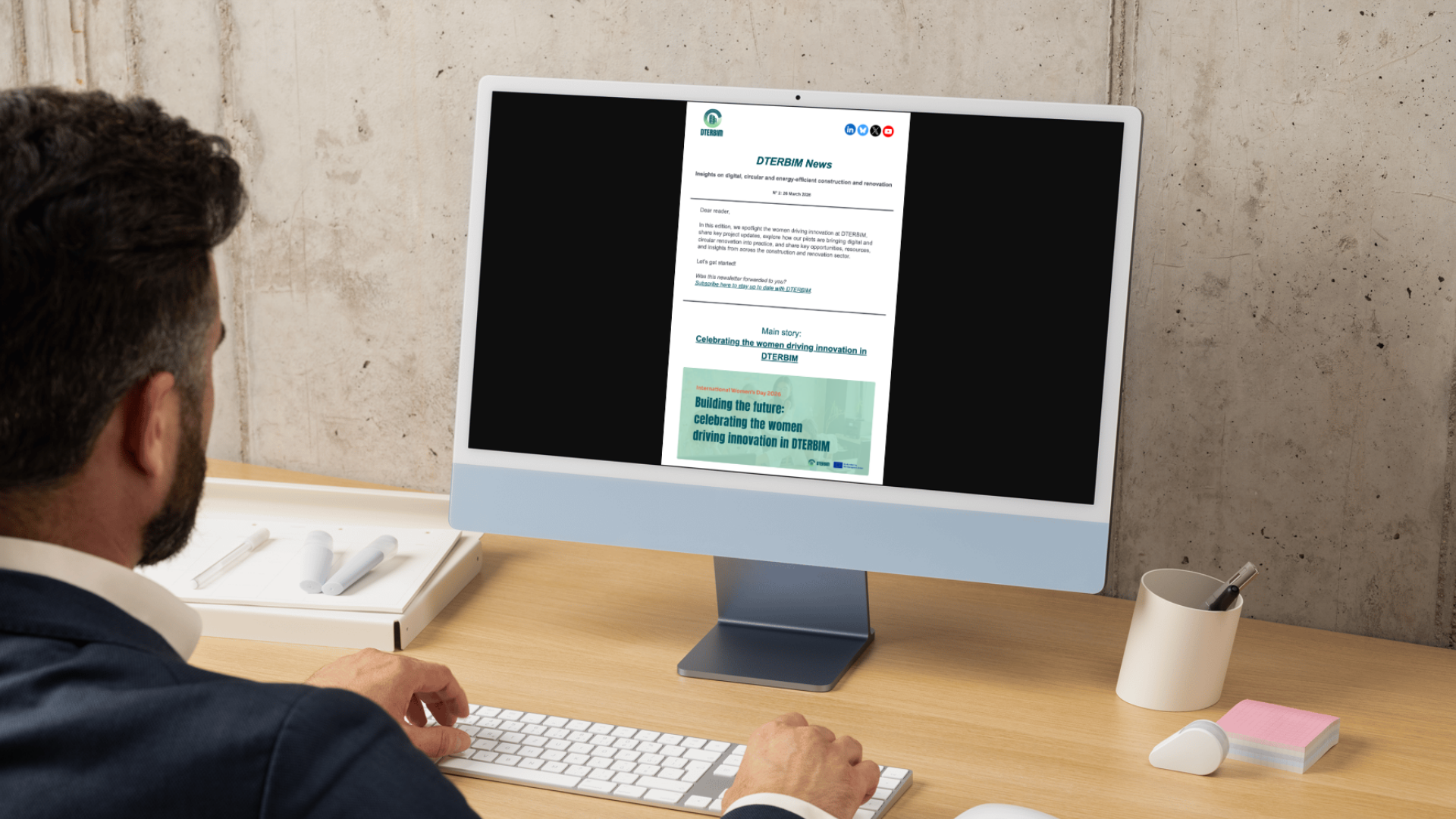
DTERBIM Newsletter #2: Women driving innovation, project updates, and pilot insights
The second edition of the DTERBIM newsletter is now available, bringing together the latest updates and insights from across the project. In this issue, we spotlight the women driving innovation at DTERBIM, share recent progress, and introduce how our pilots are advancing digital and circular renovation across Europe.
What’s inside this second edition?
The newsletter features the stories of six women from DTERBIM who are contributing to transforming the construction innovation sector. They reflect on their career paths, the challenges of working in traditionally underrepresented fields, and the importance of diversity in driving innovation.
It also highlights recent developments, from our Tools & Services Workshop, where we reviewed the full suite of DTERBIM tools and defined the use cases guiding the upcoming validation phase, to our feature on the cover of Materiały Budowlane, showcasing one of our pilot buildings in Poland.
The edition introduces our Brand Book, designed to ensure consistent and effective communication about the project, and our pilots, where we are validating our approach both virtually and through three real-life demonstrations in Spain, Poland, and Greece.
It also includes a selection of events and resources on digital twins, AI, and construction innovation, helping readers stay up to date with the trends shaping the sector.
Read the DTERBIM newsletter #2
Subscribe for future updates, visit our website, and follow us on LinkedIn, Bluesky, X, and YouTube.
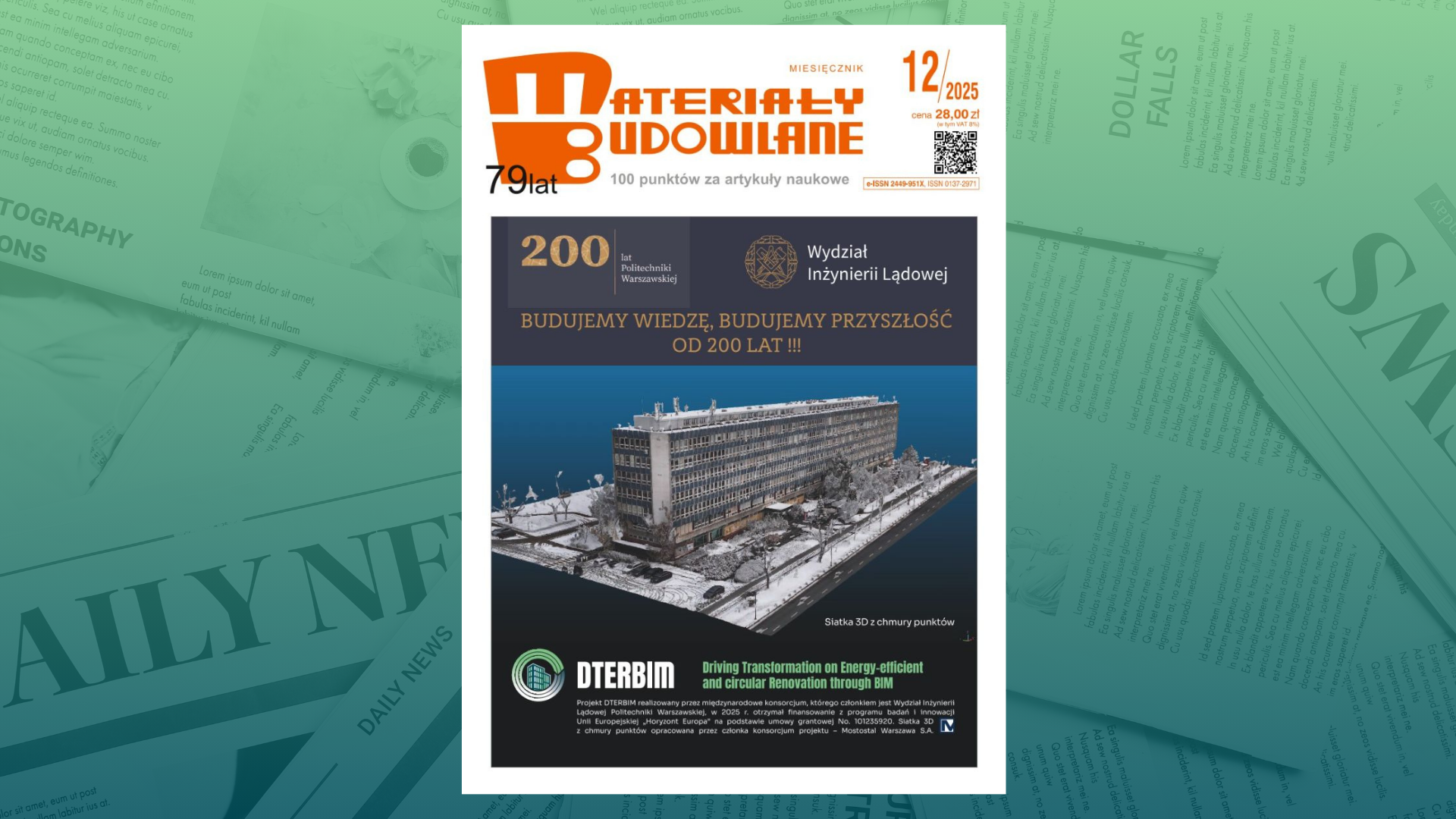
DTERBIM featured on the cover of Materiały Budowlane journal
DTERBIM appears on the cover of the December 2025 issue of Materiały Budowlane, a prestigious Polish journal for the construction industry! This special edition celebrates the 200th anniversary of the Faculty of Civil Engineering at the Warsaw University of Technology, one of DTERBIM's pilot sites in Poland.
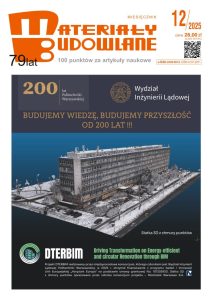
The cover showcases a 3D mesh generated from a point cloud of the Faculty building, created by our partner Mostostal Warszawa S.A. This digital representation demonstrates the type of innovative work DTERBIM brings to building renovation: transforming physical structures into precise digital models that enable smarter planning, collaboration, and sustainable outcomes.
The feature highlights how DTERBIM's Digital Twin approach is being applied to real buildings across Europe, supporting the renovation of diverse structures with advanced digital tools.
About DTERBIM
DTERBIM is a Horizon Europe project developing an open, interoperable BIM-based ecosystem powered by AI and Digital Twins to accelerate Europe's transition to circular, energy-efficient building renovation. The consortium brings together 18 partners across Europe working to create user-friendly digital tools, open standards, and validated solutions demonstrated through pilots in Spain, Poland, and Greece.
For more updates and stories on DTERBIM, visit our website, subscribe to our newsletter, and follow us on LinkedIn, Bluesky, X, and YouTube.
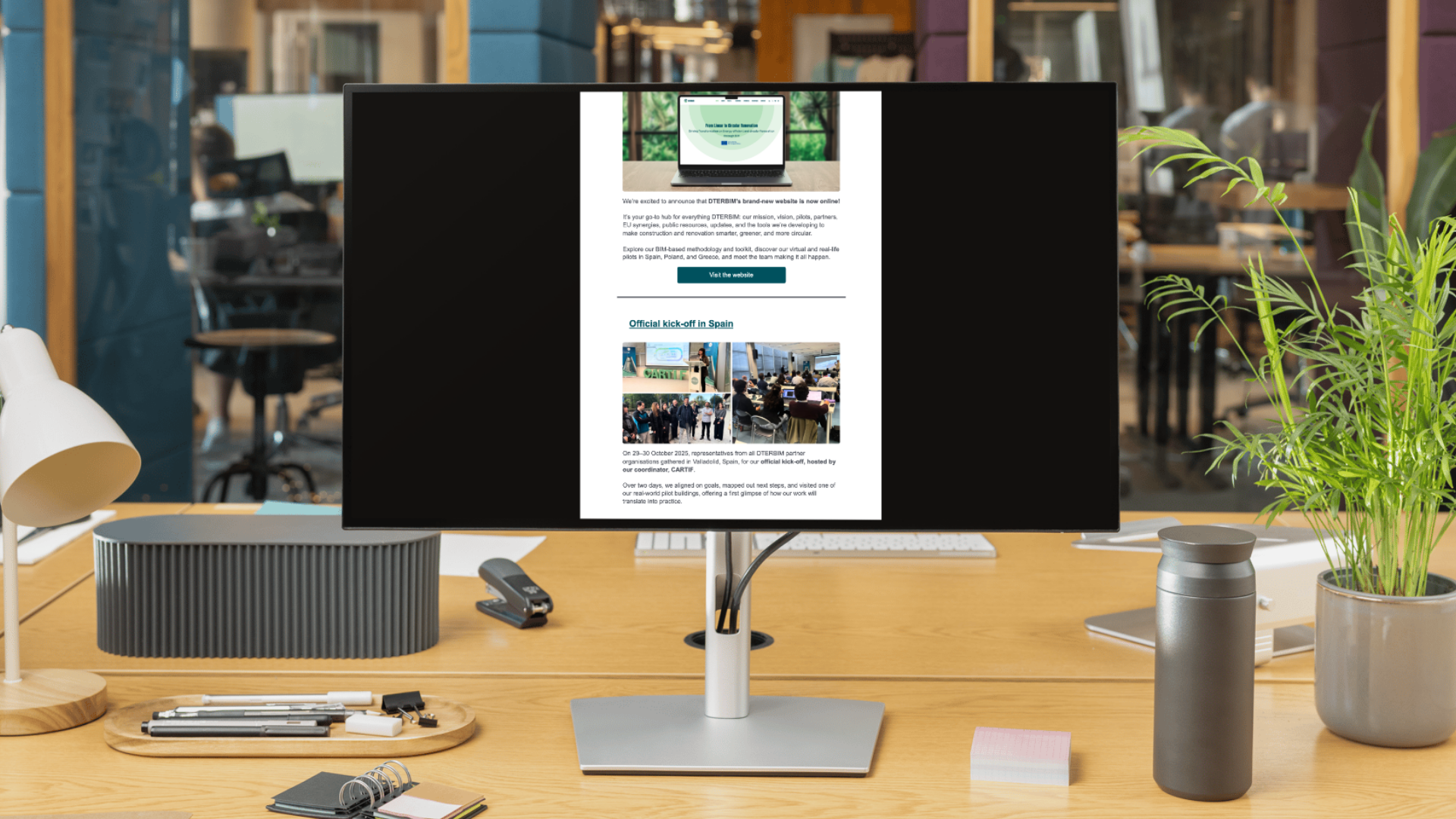
DTERBIM Newsletter #1: A look at our first milestones
We are pleased to share the first edition of the DTERBIM newsletter, marking an important milestone as the project officially gets underway. Launched at the end of 2025, this first issue brings together key highlights from the first months of the project and offers a first glimpse of what’s ahead.
What’s inside this first edition?
In this newsletter, you will find:
- The launch of the DTERBIM website, your go-to hub for project updates, pilots, resources, and tools
- Highlights from our official kick-off meeting in Spain, where partners from across Europe came together to align on goals and next steps
- Our first press release, introducing DTERBIM’s vision, approach, and expected impact
- An introduction to our team, bringing together 18 partners from 8 countries
- A curated selection of news, events, and resources related to digital, circular, and energy-efficient construction and renovation in Europe
This newsletter is one of the ways we will share progress, insights, and inspiration, not only from DTERBIM but also from the wider ecosystem working to transform the built environment.
We invite you to explore the first edition, share it with your network, and subscribe to stay up to date as our progress evolves.
Read the first DTERBIM newsletter
For more updates and stories on DTERBIM, visit our website and follow us on LinkedIn, Bluesky, X, and YouTube.
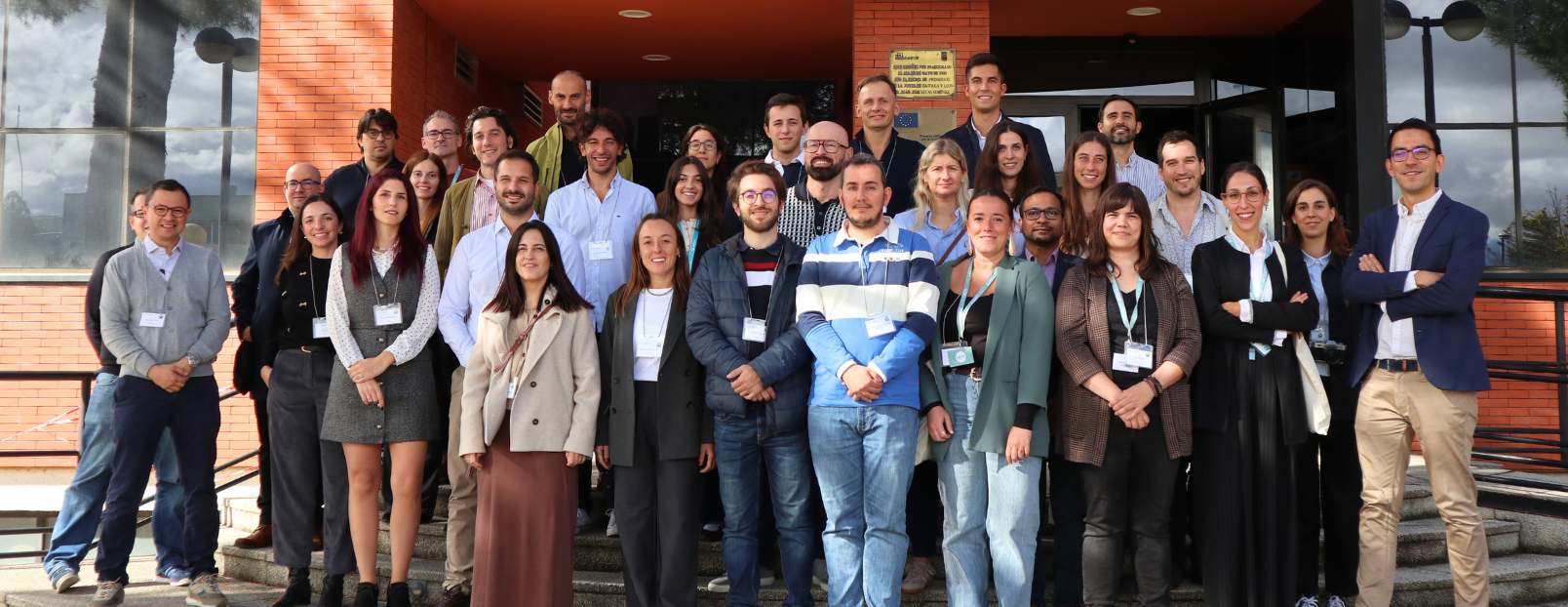
From linear to circular renovation: DTERBIM officially launches
The DTERBIM project (Driving Transformation on Energy-efficient and circular Renovation through BIM) has officially launched, marking the start of an ambitious 42-month initiative to transform Europe’s construction and renovation sector. To announce the project’s start, the consortium has released its first official press release, outlining DTERBIM’s vision, objectives, and planned pilot activities. Funded under the European Union’s Horizon Europe programme with a budget of €3.83 million, DTERBIM aims to accelerate the shift from linear construction processes to digital, circular, and energy-efficient renovation.
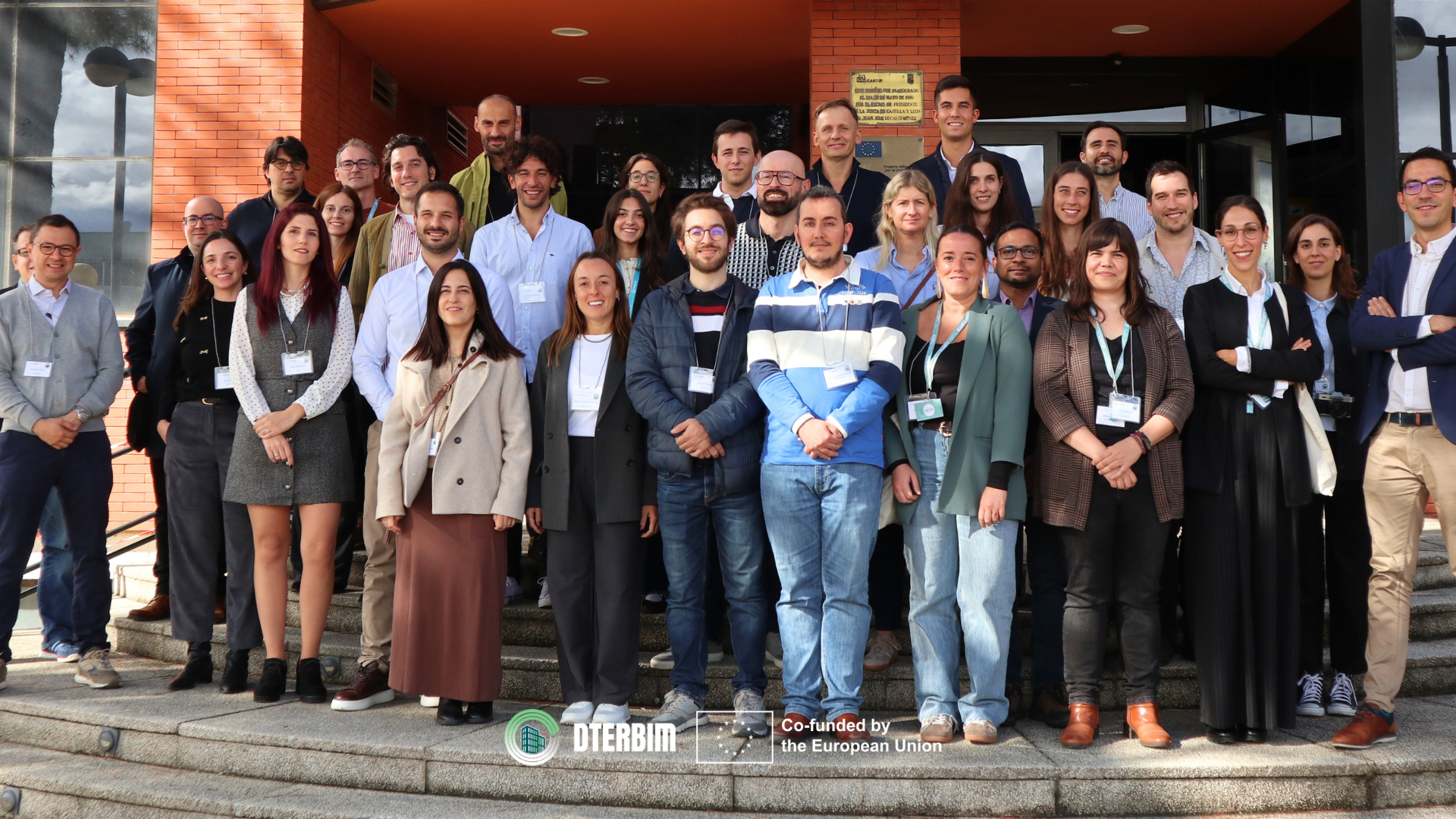
The project officially kicked off on 29-30 October 2025 at the CARTIF Technology Centre in Valladolid, Spain, bringing together 18 partners from eight countries for two days of alignment, planning, and a visit to one of the real-life pilot buildings.
A vision for circular, digital, and sustainable renovation
DTERBIM is developing an innovative, interoperable, and adaptable BIM-based methodology, the DTERBIM process, to make building renovation and management more efficient. By optimising resources such as materials, products, and energy, reducing time and costs, and embedding circularity principles from the outset, the project seeks to transform how buildings are designed, renovated, and managed.
At the centre of this approach is the DTERBIM Toolkit, a suite of user-friendly digital tools, AI-powered services, and Digital Twins, all integrated within an openBIM ecosystem. This ecosystem ensures seamless interaction between tools, robust data exchange, and collaboration across stakeholders, empowering the construction sector to make informed, sustainable decisions throughout the building lifecycle. From design and construction to operation, maintenance, deconstruction, and reuse.
“The DTERBIM project aims to demonstrate how digitalisation can transform the way we design, renovate and manage buildings, integrating circularity for a more efficient and sustainable process. By combining digital technologies such as BIM, Artificial Intelligence, and Digital Twins, it will help improve material traceability and enable more informed decision-making throughout the building lifecycle. Ultimately, DTERBIM aspires to take a decisive step toward a more innovative, circular, and connected Architecture, Engineering, and Construction (AEC) sector,” says Sonia Álvarez Díaz, Project Coordinator, CARTIF.
Five pilot projects across Europe
DTERBIM will validate its methodology through two virtual pilots and three real-life building demonstrations:
- A residential historical building in Valladolid, Spain
- An academic building in Warsaw, Poland
- A kindergarten and elementary school in Athens, Greece
These pilots aim to deliver measurable results, including up to 15% reductions in costs and time, 35% improvements in building performance, and 15% of materials saved for reuse, while engaging over 60 SMEs at local and regional levels.
By aligning with key EU initiatives and incorporating participatory approaches, DTERBIM will define and demonstrate a new paradigm for the European construction and renovation sector.
A multidisciplinary consortium driving innovation
The DTERBIM consortium brings together engineering, architecture, computer science, environmental sciences, social sciences, economics, and policy expertise to ensure a holistic approach to innovation and implementation.
Partners include: CARTIF (project coordinator), Mostostal Warszawa, University College London, ICCS - NTUA (Institute of Communication and Computer Systems of NTUA), CEMOSA, CYPE, Contecht GmbH, Live Information System, Buildings Performance Institute Europe, Acciona Construcción, VEOLIA Servicios LECAM, GEOTER, FASADA, Warsaw University of Technology, Hellenic Passive House Institute, Urban Soul Project, Smartflex, and Australo.
DTERBIM is ready to reshape Europe’s renovation sector with digital, circular, and energy-efficient solutions.
Read the full press release here.
For press and collaboration enquiries, contact: dterbim@australo.org
Stay connected with DTERBIM! Subscribe to our newsletter and follow us on LinkedIn, X, Bluesky, and YouTube for the latest updates, project insights, and stories from our community.